
Last Updated: October 27, 2026
Quick Summary
To prepare your home for exterior construction, start two to four weeks ahead by confirming the start date, signing the contract, and getting permit status in writing. Then clear the work zone, move vehicles, protect landscaping, and photograph the house before the crew arrives.
- Ask who pulls the permit, since a missing permit can stop work halfway through.
- Move furniture at least three feet away from exterior walls before work begins.
- Call 811 before any excavation so underground utilities can be located and marked.
- Ask your contractor for the weather-delay communication plan before work starts.
- Take dated photos of the exterior and yard as a baseline if a dispute arises.
Table of Contents
- Start With a Pre-Construction Timeline
- Build an Exterior Renovation Checklist for Homeowners
- Protect Your Landscaping Before the First Truck Arrives
- Move Belongings and Prepare an Occupied Home
- Coordinate Utilities, Access and Safety on Site
- Plan for Weather, Drainage and Temporary Protection
- Questions to Ask Your Exterior Contractor Before Work Starts
- Book Your Free Estimate and Lock In Your Start Date
- Frequently Asked Questions
Start With a Pre-Construction Timeline
Exterior construction is easier to survive when you know what happens each week. A simple timeline can help homeowners prepare for exterior construction.
Here is the sequence most projects follow:
- Two to four weeks before: Confirm the start date, sign the contract, and ask for the permit status in writing.
- One week before: Move vehicles, confirm water and electric access, and clear the work zone.
- Day before: Remove items from exterior walls, close windows, and take photos of the house.
- Start day: Walk the site with the crew lead and agree on daily hours and parking.
Watch out: Many homeowners skip the permit check. Ask who pulls the permit, because a missing permit can stop work halfway through.
The timeline below breaks the pre-construction sequence into the steps most projects follow.
| When | What to do | Note |
|---|---|---|
| Two to four weeks before | Confirm start date, sign contract, ask for permit status in writing | Ask who pulls the permit |
| One week before | Move vehicles, confirm water and electric access, clear work zone | Confirm access points |
| Day before | Remove items from exterior walls, close windows, take photos | Photograph the house |
| Start day | Walk the site with the crew lead | Agree on hours and parking |
Build an Exterior Renovation Checklist for Homeowners
Exterior work on an occupied home has a rhythm: some items must happen weeks out, some the day before, and some the morning the crew arrives. The checklist below is organized by when each item matters, so you can work through it in order instead of guessing.
Two to Four Weeks Before Work Begins
- Get the signed contract and the permit status in writing. Ask who pulls the permit and when it is expected to be issued.
- Confirm the project start date, daily work hours, and the crew lead’s name and phone number.
- Photograph every exterior wall, window, door, and the yard from several angles. Date-stamp the photos; they are your baseline if a dispute arises.
- Walk the property with the contractor and mark the work zone, material staging area, and dumpster location.
- Identify any buried sprinkler heads, landscape lighting, invisible fence wire, or septic components in the work zone. Flag them with stakes or paint.
One Week Before Work Begins
- Clear the work zone of outdoor furniture, grills, planters, garden hoses, and toys.
- [ ]
- Confirm water and electrical access points the crew will use, and whether they need temporary power.
- Set aside an indoor staging area for pets and children away from the work side of the house.
- [ ]
The Day Before Work Begins
- Remove wall hangings, mirrors, and shelves from interior walls that share the exterior work zone. Vibration can drop them.
- Close and lock windows on the work side; note which ones the crew may need to open.
- Move furniture at least three feet from exterior walls.
- Take a final set of dated photos of the exterior and the yard.
- [ ]
The Morning Work Begins
- Walk the site with the crew lead before any work starts.
- Confirm the parking plan, the dumpster location, and the path from the street to the work zone.
- Exchange cell numbers with the crew lead and confirm the escalation contact for after-hours problems.
- Confirm that pets are secured and children know the work-zone boundaries.
Save this checklist as a shared note on your phone and check items off as you go. Contractors respond faster when you can point to a specific item that was or was not done.
Project-Specific Additions
The core checklist above applies to most exterior work, but each project type adds its own items:
- Siding: Confirm how the crew will access upper stories (scaffolding or ladders), and ask how they will handle existing insulation and house wrap.
- Roofing: Move vehicles out of the driveway, protect landscaping below the roofline with tarps, and confirm the dumpster placement so shingles can be dropped directly into it.
- Windows and doors: Clear interior access to each opening, remove blinds and curtains, and confirm the trim-repair plan for any rot found after removal.
- Painting: Confirm the washing and scraping schedule, and expect overspray protection on adjacent surfaces.
- Masonry and additions: Confirm excavation and grading plans, utility locates, and how the crew will protect adjacent structures from dust and vibration.
Ask for a written checklist and compare it against this one, gaps between the two are worth a conversation before work starts.
Protect Your Landscaping Before the First Truck Arrives
Trucks, dumpsters, and foot traffic can crush plants and damage lawns. Protecting your landscaping early can help avoid damage.
Start by marking the beds, shrubs, and trees you want to keep. Place stakes or bright tape around them.
Ask the crew where they plan to park and stage materials. A driveway or gravel area can be used instead of a lawn.
Move Belongings and Prepare an Occupied Home
Living in your home during exterior work is possible, but it takes planning. Most of the disruption comes from noise, dust, and blocked doors and windows.
Exterior Walls, Windows and Doors
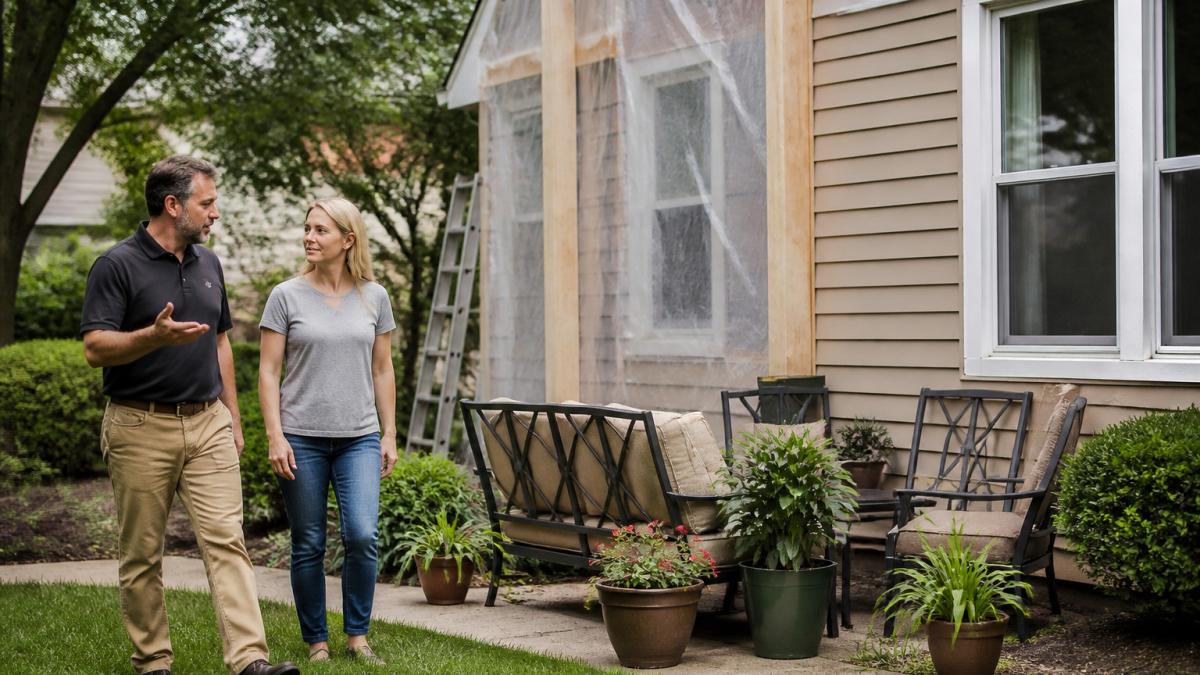
Move furniture at least three feet away from exterior walls. Read our full guide on preparing a home for window replacement for more detail on openings and interior access. Take down wall art and mirrors near windows. Close blinds and curtains so debris does not land on them. Keep one entry door clear for daily use.
Pets, Children and Daily Routines
Plan a quiet space indoors for pets and children, away from the work side of the house. Talk with your family about the work schedule so surprises are fewer. If someone works from home, ask the crew for quiet hours during important calls.
Coordinate Utilities, Access and Safety on Site
Utilities and site access are important categories of preparation. The specifics below can help you plan for a shutoff valve or a blocked driveway.
Locate Underground Utilities Before Anyone Digs
If the project involves excavation, grading, fence posts, or foundation work, underground utilities must be located before a shovel hits the ground. The national call-before-you-dig service is reachable by dialing 811 (811 Before You Dig).
- Call 811 or file a request online before excavation.
- Mark the work area with white paint or flags so the locator knows where to look.
- Photograph the marked lines before any digging begins.
- Keep the locate ticket number; it is your proof if a line is struck.
- Private lines, sprinkler systems, landscape lighting, invisible fence wire, and lines from a pool or detached garage, may need separate attention.
Striking a utility line can cause injury, service outages, and expensive repairs. Never let a crew dig before the locate marks are in place and photographed.
Confirm Utility Shutoffs and Service Access
- Know where the main water shutoff, electrical panel, and gas meter are, and show the crew lead on day one.
- Ask whether the crew needs temporary power or water, and where they will connect.
- If service will be shut off at any point, get the time window in writing and plan around it.
- Confirm that the crew knows how to reach you if a utility problem arises after hours.
Arrange Contractor Access and Parking
- Decide which gate, path, or driveway the crew will use, and confirm it is wide enough for trucks and material deliveries.
- Reserve a parking area that does not block your neighbors’ driveways or the street’s emergency lane.
- Confirm the dumpster placement with the contractor and check HOA or municipal rules on where it can sit and for how long.
- Keep a clear path from the street to the work zone; cords, hoses, and material stacks in walkways are a trip hazard and slow the crew down.
Keep Emergency Routes Clear
- Do not let materials, dumpsters, or vehicles block the driveway, fire hydrants, or the path an ambulance would use.
- Keep at least one entry door to the home clear at all times.
- Confirm that the crew’s equipment does not obstruct sidewalks or the street.
Manage Children, Pets, and Daily Safety
- Set clear boundaries: a work zone the children and pets do not enter, marked with tape or cones if needed.
- Keep pets indoors or in a fenced area away from the work side of the house, and confirm gates are latched.
- Talk with your family about the daily work hours so no one is surprised by noise or blocked doors.
- If you work from home, ask the crew lead for quiet hours during important calls.
An 811 locate call is one action to consider before digging.
Ask for a clear site plan in writing that shows parking, staging, dumpster placement, and the work zone.
Plan for Weather, Drainage and Temporary Protection
Weather can change a schedule. Ask your contractor how they plan to protect openings and the yard if rain comes.
Check your gutters and downspouts before work begins. Learn how to prevent clogged gutter damage in seven steps. Clogged gutters can overflow. Many homeowners find drainage problems after a storm, so take a look after the first heavy rain.
Questions to Ask Your Exterior Contractor Before Work Starts
Good questions prevent most surprises. Ask these before you sign:
- Who pulls the permits, and can I see them?
- What is the daily work schedule, and what hours will the crew be on site?
- How will you protect my landscaping, pets, and belongings?
- Who is my contact if a problem comes up at night or on a weekend?
- How do you handle weather delays, and how will I be notified?
EFER Renovations Inc. offers a 10-year workmanship warranty and 24/7 emergency support. The company also provides insurance claims assistance.
Book Your Free Estimate and Lock In Your Start Date
A clear plan can help you prepare for exterior construction. If you are ready to move forward, contact EFER Renovations Inc. for an estimate. If you are still deciding between repair and replacement, compare roof replacement and repair costs before you commit.
Frequently Asked Questions
How do I prepare my home for exterior construction?
Start by walking the exterior with your contractor and noting every item that will be disturbed. Clear the work zones of vehicles, outdoor furniture and grills, and move anything fragile away from walls, windows and doors. Mark sprinkler heads, outdoor lighting and buried lines so they are protected. Confirm access routes for trucks and materials, and agree on daily start and stop times so you know what to expect each day.
How do you protect landscaping during construction?
Cover plants, shrubs and lawn areas near the work where foot and equipment traffic will pass. Water beds the day before work begins, and tie back branches that overhang the house. Ask where materials will be staged so they are not stacked on garden beds. Document existing conditions with photos before the first day.
Should I stay home while contractors work on the exterior?
You do not have to be home every hour, but being present for the first day and key milestones helps. Use the first day to walk through access points, pets, parking and where you want materials staged. Plan to check in at the end of each day to review progress and any questions. If you work from home, keep your workspace away from noisy areas, and make sure children and pets have a safe, quiet room indoors.
What should I ask a contractor before exterior work begins?
Ask who will be on site each day, how the schedule handles weather delays, and who to contact after hours. Confirm the warranty terms and ask how changes to scope or price are approved in writing. Ask whether the company provides insurance claims assistance. Clear answers to these questions can help you prepare for the project.
Contact EFER Renovations Inc. today to plan your exterior project with a team backed by 13 years of experience, GAF, Owens Corning, and IKO certifications, and a 10-year workmanship warranty.
