
Table of Contents
- Roof Replacement vs Roof Repair: Key Differences and Cost Comparison
- Signs You Need a New Roof (and When Repair Is Enough)
- Average Cost of Roof Replacement in 2026
- How Long Does a Roof Replacement Take?
- The Roofing Insurance Claim Process: When It Covers Replacement vs Repair
- When to Repair vs Replace: A Decision Framework
- Frequently Asked Questions
Last Updated: September 16, 2026
Roof Replacement vs Roof Repair: Key Differences and Cost Comparison
A roof replacement vs roof repair cost comparison starts with one hard truth: repair patches the problem you can see, while replacement addresses the damage you can’t. At EFER Renovations Inc., we’ve walked thousands of property owners through this decision across New Jersey and Eastern Pennsylvania, and the gap usually comes down to age, extent of damage, and how long you plan to stay.
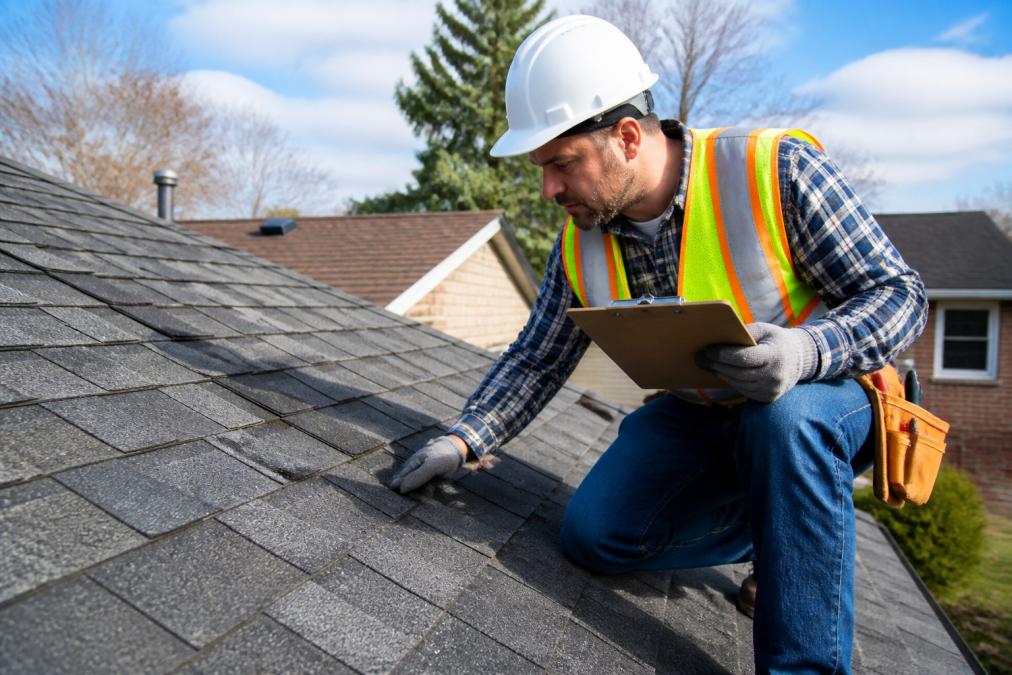
What Each Option Actually Involves
Roof repair is the targeted fix: replacing damaged shingles, resealing flashing around chimneys and vents, patching a roof valley, or addressing leak detection at a specific point. Most repairs touch a small percentage of the roof surface.
Upfront Cost vs Long-Term Value
Repairs win on upfront investment. Replacements win on long-term protection.
If your roof is past 75% of its expected lifespan, put repair money toward replacement instead. You’ll spend once rather than twice.
Signs You Need a New Roof (and When Repair Is Enough)
The clearest signs you need a new roof are widespread shingle curling, granule loss across large sections, and multiple leaks in different areas. Isolated damage points to repair.
- Shingle curling or buckling across multiple slopes, not just one section
- Granule loss visible as bald patches or accumulation in gutters
- Daylight through roof decking visible from inside the attic
- Sagging rooflines suggesting structural integrity problems
- Mold growth or dark staining on interior ceilings and walls
- Age past 20 years for standard asphalt shingles
Ignoring early leak detection signs leads to water damage inside walls and ceilings. By the time stains appear, the damage has usually been spreading for weeks or months.
Average Cost of Roof Replacement in 2026
There’s no single average cost of roof replacement in 2026 that applies to every home, because pricing depends on square footage, roof pitch, material choice, and local labor costs. Any contractor quoting a flat number before inspecting is guessing.
| Cost Factor | What It Affects | Why It Matters |
|---|---|---|
| Square footage | Total material volume | Larger roofs need more shingles, underlayment, and labor hours |
| Roof pitch | Labor difficulty | Steep roofs require fall protection and slower, careful work |
| Material quality | Shingle grade and lifespan | Architectural shingles cost more than standard three-tab |
| Roof decking | Structural repairs | Rotted decking must be replaced before new roofing goes down |
| Labor costs | Regional rates | Crew availability and local market rates vary widely |
| Ventilation | Energy efficiency | Ridge vents and intake vents affect long-term performance |
Material-Specific Cost Breakdown
Material choice is the biggest lever on replacement cost. Asphalt shingles remain the most common option because they balance cost and durability, and they’re what most homes in this region already have. The table below shows typical installed cost per square for each material, plus the lifespan you’re buying.
| Material | Typical Installed Cost per Square | Expected Lifespan | Notes |
|---|---|---|---|
| Three-tab asphalt shingles | $90 – $150 | 15 – 20 years | Lowest upfront cost; most common on older homes |
| Architectural (dimensional) asphalt shingles | $120 – $200 | 25 – 30 years | Standard upgrade; better wind and impact ratings |
| Standing seam metal | $400 – $900 | 40 – 70 years | Higher upfront; often justified by lifespan |
| Metal shingle / stone-coated steel | $300 – $600 | 40 – 50 years | Lighter than tile; mimics shake or tile profiles |
| Clay or concrete tile | $500 – $1,000 | 50+ years | Requires structural verification for weight |
| Natural slate | $800 – $1,600 | 75 – 100 years | Heaviest option; historic-home specialty |
| Synthetic slate or shake | $350 – $700 | 30 – 50 years | Lighter than natural; lower structural demand |
What Actually Moves Your Quote
Two homes on the same street can receive quotes differing by thousands of dollars. The reasons are usually structural, not cosmetic:
- Number of layers to tear off. A second layer adds disposal weight and labor; a third usually triggers a full tear-off requirement.
- Decking condition. Soft or delaminated sheathing must be replaced before underlayment goes down, the most common line item added after tear-off begins.
- Roof complexity. Valleys, dormers, skylights, and chimneys each add flashing detail and slow the crew.
- Access and staging. A steep driveway, narrow lot, or blocked dumpster placement adds time.
- Permits and disposal. Most jurisdictions require a roofing permit, and dumpster fees scale with layers removed.
How Long Does a Roof Replacement Take?
A typical residential roof replacement takes one to three days for an average single-family home, though steep pitch, multiple valleys, or extensive decking repairs can stretch it to a week.
Here’s what the timeline looks like:
- Day one, morning: Crew arrives, sets up safety equipment, and begins tear-off
- Day one, afternoon: Old materials hauled away, decking inspected and repaired
- Day two: Underlayment, drip edge, and flashing installed
- Day two to three: New shingles laid, ridge ventilation completed
- Final day: Cleanup, magnetic sweep for nails, and final inspection
The Roofing Insurance Claim Process: When It Covers Replacement vs Repair
The roofing insurance claim process covers full replacement when storm damage is extensive, and repair when damage is isolated. Normal wear and tear is never covered.
Here’s how the process typically moves:
- Document the damage with photos and notes immediately after the storm
- File your claim with your insurer and get a claim number
- Adjuster inspection happens on-site, often within days
- Get an independent contractor estimate to compare against the adjuster’s scope
- Review the settlement and dispute anything missing from the scope
- Schedule work once the claim is approved
The Documentation That Decides Repair vs Replacement
Most guides stop at “take photos.” The adjuster’s decision turns on evidence proving damage is systemic rather than isolated. Assemble this before the inspection to shift the conversation from opinion to documentation.
What to photograph, and from where:
- Wide shots of each roof slope from the ground, so the adjuster sees the damage pattern across the whole field, not just the worst spot.
- Close-ups with a reference object (tape measure, coin, hand) next to damaged shingles, so size and depth are unambiguous.
- Interior ceiling and attic shots showing staining, daylight through decking, or wet insulation, interior evidence ties exterior damage to a covered loss.
- Gutters and downspouts showing granule accumulation, which supports an age-and-wear argument the insurer may use to deny.
- Date-stamped images taken before any tarping, temporary repair, or cleanup. Once materials are moved, proving original condition becomes much harder.
What to write down:
- Date and approximate time of the storm event, plus the weather report or news coverage that confirms it.
- A simple damage log: which slope, what type of damage, and roughly how many shingles are affected in each area.
- Any prior repair receipts, so the insurer can see the roof was maintained rather than neglected.
Why the Adjuster’s Scope Often Misses Line Items
Adjusters work from their own scope, which sometimes omits roof decking, flashing, drip edge, or ventilation, items only visible once tear-off begins. A common pattern is a settlement covering shingles but not the underlayment or decking beneath, leaving the homeowner to cover the difference.
Two practical ways to close that gap:
- Have a licensed roofing contractor present during the inspection. Contractors who work insurance claims daily know which line items adjusters routinely miss and can point them out on the spot.
- Request a re-inspection if the scope is short. Most policies allow it, and a written contractor estimate that itemizes the missing work is the standard basis for the request.
Photograph everything before any tarping or temporary repair. Once materials are moved or covered, documenting the original damage becomes much harder.
Normal wear and tear, curling, granule loss, and aging, is excluded from most policies. If the adjuster attributes the damage to age rather than the storm, the claim is likely to be denied. That’s why date-stamped storm evidence and interior water damage photos matter so much.
When to Repair vs Replace: A Decision Framework
Use this framework to make the call without second-guessing yourself:
- Is your roof under 15 years old with isolated damage? Repair.
- Is your roof over 20 years old with damage in multiple areas? Replace.
- Is the damage storm-related? File an insurance claim before deciding.
- Do you plan to sell within 3 years? A new roof supports resale value and passes inspection.
- Is the repair cost approaching a meaningful fraction of replacement? Replace.
- Are you patching the same area repeatedly? Replace.
- Is the roof decking or underlayment compromised? Replace.
Homeowners with roofs past the 15-year mark who want one honest assessment before committing to either path.
Frequently Asked Questions
Is it better to repair or replace a roof?
It depends on the roof’s age, extent of damage, and your long-term plans. If your roof is under 15 years old and damage is isolated to a small area, a repair often makes sense. But if the roof is over 20 years old, has widespread granule loss, or shows sagging, replacement is usually the smarter investment. A professional roof inspection can confirm which option protects your home and budget best.
Does insurance cover roof replacement vs repair?
Most homeowners insurance policies cover storm damage, hail, or sudden events that cause leaks, whether the fix is a repair or full replacement. Normal wear and tear is typically excluded. If an adjuster determines the damage exceeds your deductible and meets policy criteria, the roofing insurance claim process can cover part or all of the cost. Document everything and work with a contractor experienced in claims.
What is the average cost difference between a roof patch and a full replacement?
A patch repair costs a fraction of a full replacement because it addresses only the damaged section, while replacement covers the entire roof system including underlayment, flashing, and drip edge. The exact gap depends on roof size, pitch, material, and labor in your area. For a precise number, request a no-obligation estimate from a licensed roofing contractor who can assess your specific roof.
How do I know if my roof needs repair or replacement?
Look for shingle curling, granule loss in gutters, daylight through roof decking, water stains on ceilings, and mold growth in the attic. If damage is contained to one roof valley or a small section after a storm, repair may work. If you see multiple problem areas, a roof older than 20 years, or sagging, replacement is likely necessary. A professional roof inspection gives you a definitive answer.