
Table of Contents
- What Deck Installation Services in Eastern PA Actually Include
- Average Cost of Deck Installation in PA: What Drives Your Quote
- Composite vs Wood Decking Pros and Cons for This Climate
- How to Choose a Deck Contractor Without Getting Burned
- Deck Repair, Resurfacing, and When to Rebuild Instead
- Permits, Zoning, and Frost-Line Footings in Eastern PA
- Service Areas, Emergency Support, and Getting Your Free Estimate
- Frequently Asked Questions
Last Updated: September 14, 2026
What Deck Installation Services in Eastern PA Actually Include
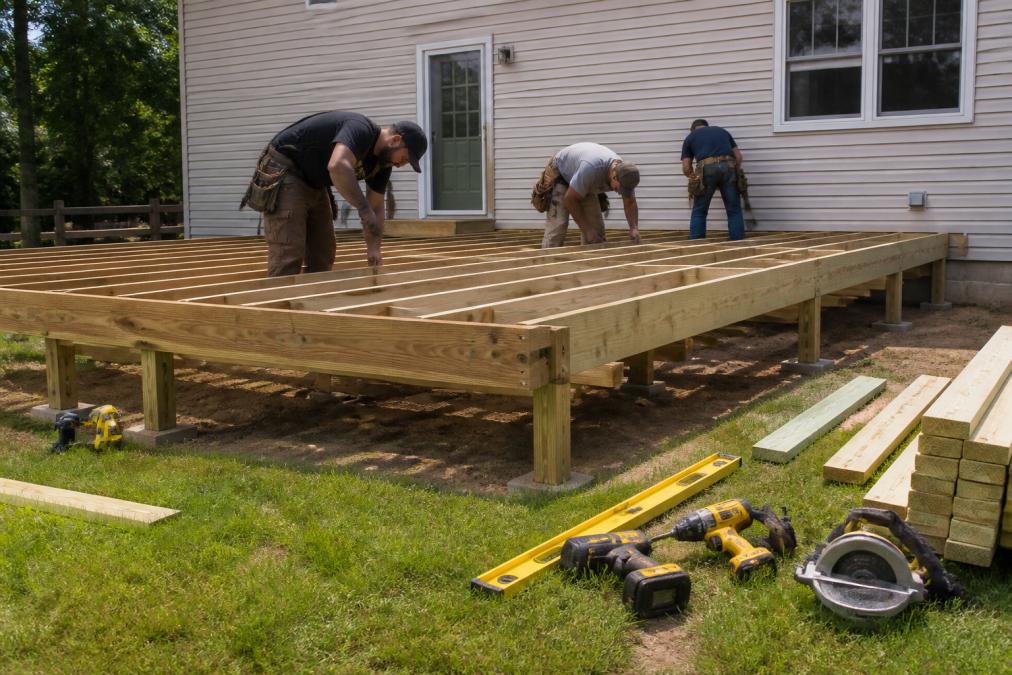
Deck installation services Eastern PA homeowners hire cover far more than nailing boards to a frame. A complete project runs from design and permits through framing, decking, railing, and final inspection, and each stage affects how long the deck lasts. This guide from EFER Renovations Inc. breaks down what you’re paying for, what drives the quote, and how to pick a contractor who finishes the job.
Design, Permits, and Site Prep
A deck installation starts with measurements, load calculations, and a plan that satisfies local building codes. Contractors check setbacks, grade, and utility lines before breaking ground, then pull the building permits your municipality requires. Skipping this step is the most common mistake homeowners make when they hire an unlicensed crew.
Framing, Decking, and Railing Systems
The substructure carries everything above it, so joist spacing, ledger board attachment, and frost-line footings decide whether your deck stays level through freeze-thaw cycles. Decking and railing systems go on last, and both must meet current safety standards for load-bearing capacity and guard height.
Average Cost of Deck Installation in PA: What Drives Your Quote
There is no single average cost of deck installation PA homeowners can rely on, because pricing depends on size, material, site access, and how much site prep the property needs. A simple ground-level deck and a second-story deck with stairs share almost no cost structure. Ask any contractor for a line-item estimate rather than a lump sum.
Typical Cost Ranges by Material
Pricing depends on size, material, site access, and how much site prep the property needs. A simple ground-level deck and a second-story deck with stairs share almost no cost structure. Ask any contractor for a line-item estimate rather than a lump sum.
| Material | Installed Cost per Sq. Ft. | Typical 12×16 Deck (192 sq. ft.) |
|---|---|---|
| Pressure-treated wood | $25-$40 | $4,800-$7,700 |
| Composite | $40-$65 | $7,700-$12,500 |
| PVC | $50-$80 | $9,600-$15,400 |
What Each Line Item Actually Costs
A written estimate should break the project into these buckets so you can compare bids apples to apples:
- Footings and framing – the substructure is roughly 30-40% of the total on a typical wood deck. Frost-line footings, ledger attachment, and joist spacing all live here.
- Decking material – the largest single line on most quotes, and the one that varies most by brand and grade.
- Railing – wood, composite, and metal systems price differently, and code-required guard height on elevated decks adds material.
- Stairs – each set of stairs is a separate framing and railing cost, not a rounding error.
- Site prep and removal – grading, old deck demolition, and hauling away debris.
- Permits and inspections – fees vary by municipality and are usually passed through at cost.
Why Two Quotes for the Same Deck Differ
A common pattern is a spread of 30-50% between the lowest and highest bid on an identical scope. The gap usually comes from three places: whether footings are included at the correct frost depth, whether the ledger is properly flashed and attached, and whether the railing meets current code. A low bid that skips one of those is not a cheaper deck, it is a smaller deck.
Never accept a verbal quote. Without a written, line-item estimate, you have no way to compare bids or hold a contractor to the scope you agreed on. Ask specifically whether footings, flashing, and railing are included, because those are the three items low bids most often leave out.
How to Use These Numbers
Composite vs Wood Decking Pros and Cons for This Climate
Composite decking resists rot, splintering, and insect damage better than wood, which matters in a region with humid summers and hard freezes. Wood costs less upfront and feels cooler underfoot, but it needs staining and sealing every few years. The right choice depends on how much maintenance you’ll actually do, and on how each material behaves through the freeze-thaw cycles that define this climate.
How Freeze-Thaw Cycles Affect Each Material
Water is the enemy, and the mechanism is the same for every deck: moisture gets into the material, freezes, expands, and pushes the material apart. What differs is how well each product keeps water out.
- Pressure-treated wood absorbs and releases moisture with the seasons. Boards swell in wet weather and shrink in dry, which opens gaps at fasteners and lets more water in. Annual or biennial sealing slows this, but does not stop it. Expect to re-stain every 2-3 years, and expect surface checking (small cracks) as the wood ages.
- Composite is made from wood fiber and plastic, so it takes on far less moisture than solid wood. It resists the swelling and shrinking cycle, which is why it holds its shape and color longer. Early composites were prone to mold and fading; current capped composites address both with a protective shell.
- PVC is fully plastic with no wood fiber, so it absorbs essentially no water. It is the most dimensionally stable option in a freeze-thaw climate, and it is also the most expensive.
The Substructure Matters More Than the Surface
No decking material will survive a bad frame. Frost-line footings, a properly flashed ledger board, and correct joist spacing determine whether the deck stays level through winter. If the frame moves, even the best composite will gap, squeak, or fail at the fasteners. This is why a contractor should inspect and quote the substructure before recommending a surface material.
Side-by-Side Comparison
| Factor | Composite Decking | Pressure-Treated Wood |
|---|---|---|
| Upfront cost | Higher | Lower |
| Maintenance | Occasional washing | Staining every 2-3 years |
| Rot and insect resistance | High | Moderate |
| Moisture movement | Low | High |
| Surface temperature | Hotter in direct sun | Cooler |
| Lifespan with care | Long | Moderate |
Which One Fits Your Situation
For homeowners who want to skip annual upkeep and are willing to pay more upfront, composite usually wins. For those on a tighter budget who don’t mind seasonal work, wood remains a solid option. If you are building a deck you intend to keep for decades and want the least moisture movement, PVC is worth pricing even though it costs the most. The honest answer is that the best material is the one whose maintenance schedule you will actually keep.
Ask your contractor how the decking brand handles freeze-thaw and what the manufacturer’s warranty says about installation over a wood frame. Some warranties require specific joist spacing and fastener types, and a deck built outside those specs can void the coverage.
How to Choose a Deck Contractor Without Getting Burned
The best way to choose a deck contractor is to verify licensing, insurance, and a written scope before you sign anything. Ask for proof of general liability and workers’ compensation coverage, then confirm the crew pulling permits is the same crew doing the work. A common mistake is hiring on price alone and discovering mid-project that the low bid excluded footings or railing.
Questions worth asking every bidder:
- Are you licensed and insured in this state, and can I see certificates?
- Who pulls the building permit, you or me?
- What’s the footing depth for my area’s frost line?
- What’s the payment schedule, and how much is due upfront?
- What does the workmanship warranty cover, and for how long?
EFER Renovations Inc. backs deck work with a 10-year workmanship warranty and holds GAF, Owens Corning, and IKO certifications, with a 5.0 average rating across 73 Google reviews. Seniors and veterans receive a 10% discount on qualifying projects.
Deck Repair, Resurfacing, and When to Rebuild Instead
Deck repair makes sense when the substructure is sound and only the surface has failed. Deck resurfacing, which replaces decking boards while keeping the existing frame, costs less than a full rebuild and takes less time. Rebuild is the honest answer when footings have shifted, the ledger board shows rot, or joists sag.
Signs you’re past repair:
- Soft or spongy spots underfoot
- Rusted or loose fasteners throughout
- Visible rot at the ledger board or posts
- Railing that moves when pushed
- Footings that have heaved out of level
A contractor should inspect the substructure before quoting a resurface. If they don’t, get a second opinion.
Ask the inspector to probe the ledger board and posts with a screwdriver. Soft wood that gives way easily means the frame is compromised, and resurfacing would just hide the problem.
Permits, Zoning, and Frost-Line Footings in Eastern PA
Most municipalities require a building permit for a new deck, and many require one for structural repairs. Zoning regulations govern setbacks from property lines, maximum deck height, and sometimes impervious surface limits. Frost-line footings matter here because footings must extend below the local frost depth, or they’ll heave and crack the frame.
Pennsylvania’s Uniform Construction Code sets the statewide baseline, and local code officials enforce it with their own amendments. Pennsylvania Uniform Construction Code overview explains how the state code applies to residential projects. Before you build, call your township or borough zoning office to confirm setbacks and permit requirements. U.S. Consumer Product Safety Commission guidance on deck safety also outlines structural and railing safety concerns worth reviewing with your contractor.
Permits and footings aren’t paperwork formalities. They’re the two items most likely to cause a failed inspection or a deck that shifts after two winters.
Service Areas, Emergency Support, and Getting Your Free Estimate
Deck installation services in Eastern PA typically cover a defined service radius, so confirm your address falls inside it before you book an estimate. Storm damage often creates urgent needs, and a contractor with 24/7 emergency support can tarp or stabilize a damaged deck before it gets worse.
EFER Renovations Inc. serves homeowners and commercial property managers across New Jersey and Eastern Pennsylvania, with 13 years of experience in roofing, siding, windows, and decks. The team also handles insurance claims assistance, which helps when storm damage triggers a claim. If you’re not sure whether your town is covered, ask directly. FEMA guidance on filing insurance claims after storm damage is a useful primer on documenting damage before repairs begin.
To get a free, no-obligation estimate, have your deck dimensions, material preference, and any permit details ready. A good contractor will walk the site, check the substructure, and give you a written scope.
Deck projects go wrong for predictable reasons: vague quotes, skipped permits, and footings that don’t reach below the frost line. EFER Renovations Inc. handles design, permits, framing, and railing with a 10-year workmanship warranty, certified installation crews, and 24/7 emergency support when storms hit. Seniors and veterans get a 10% discount, and every project starts with a free, no-obligation estimate. Get started with EFER Renovations Inc. and build a deck that holds up through every freeze-thaw cycle.
Frequently Asked Questions
How much does it cost to build a deck in Eastern PA?
Deck installation pricing depends on size, height off the ground, material choice, railing type, and site access. A simple ground-level pressure-treated deck costs far less than a multi-level composite build with custom stairs and lighting. Because frost-line footings, permits, and demolition of an old deck can add to the total, the only accurate figure comes from an on-site measurement. Request a free, no-obligation estimate from a licensed contractor rather than relying on national averages.
Do I need a permit for deck installation in Eastern PA?
Most municipalities require a building permit for a new deck, and often for structural repairs or expansions. Requirements vary by township, so the contractor should confirm zoning setbacks, lot coverage limits, and inspection schedules with your local code office before work starts. A deck built without a permit can create problems when you sell the home. Ask any deck installation company to handle the permit paperwork and show you the approved plans.
What is the best material for decks in the Eastern PA climate?
Both pressure-treated lumber and composite decking hold up in freeze-thaw cycles when installed correctly. Pressure-treated wood costs less upfront but needs staining every two to three years and can warp or splinter over time. Composite resists rot, insects, and fading with minimal upkeep, though it costs more and can get hot in direct summer sun. The right choice depends on your budget, how much maintenance you want, and how long you plan to stay in the home.
How do I choose a deck contractor for deck installation services in Eastern PA?
Check that the contractor is licensed and insured, carries workers’ compensation coverage, and can show recent local deck projects. Ask for a written scope of work listing materials, joist spacing, ledger board attachment method, railing specifications, and cleanup. Confirm the workmanship warranty in writing, and get a start and completion timeline. A company with a long local track record, verified reviews, and clear communication is a safer bet than the lowest bid.