
Table of Contents
- Why Maintaining Commercial Exterior Siding Matters
- Creating Your Commercial Exterior Maintenance Checklist
- Step 1: Conduct a Structural Inspection
- Step 2: Clean and Remove Surface Contaminants
- Step 3: Address Caulking and Sealant Integrity
- Step 4: Manage Vegetation and Debris
- Understanding Commercial Siding Repair Costs and Tax Deductions
- Repainting and Refinishing Schedules
- Frequently Asked Questions
Last Updated: August 30, 2026
Why Maintaining Commercial Exterior Siding Matters
Your building’s exterior is its first line of defense. Neglecting commercial exterior siding maintenance doesn’t just hurt curb appeal, it accelerates structural damage that becomes exponentially more expensive to repair. Water intrusion, UV degradation, and thermal expansion are silent forces that degrade your building envelope year after year.
Proactive maintenance schedules protect your asset longevity and preserve property value. A well-maintained exterior envelope resists moisture intrusion, thermal stress, and UV degradation far longer than one left to degrade. This translates directly to avoided emergency repairs, reduced insurance claims, and maintained tenant confidence in your property management.
The goal of this guide is to give you a concrete, actionable maintenance framework. You’ll learn how to inspect systematically, clean effectively, address sealant integrity, and budget for repairs strategically. Whether you manage a small commercial property or a multi-building portfolio, these steps apply directly to protecting your investment.
Creating Your Commercial Exterior Maintenance Checklist
A maintenance checklist transforms abstract best practices into repeatable tasks. Without one, maintenance becomes reactive, you fix problems only after they become visible. With one, you catch issues before they escalate.
Your commercial exterior maintenance checklist should cover four core areas: structural integrity, surface condition, sealant systems, and vegetation management. Each area requires different inspection frequency and different remediation approaches.
Here’s a framework you can implement immediately:
| Maintenance Task | Frequency | Priority | Responsible Party |
|---|---|---|---|
| Visual structural inspection | Quarterly | High | Property manager or contractor |
| Caulking and sealant integrity check | Semi-annually | High | Licensed contractor |
| Pressure/soft washing assessment | Annually | Medium | Cleaning contractor |
| Mildew, moss, and algae treatment | As needed (typically spring/fall) | Medium | Cleaning contractor |
| Vegetation clearance and debris removal | Quarterly | Medium | Maintenance staff |
| Repainting and refinishing evaluation | Annually | Low | Contractor |
| Water damage and moisture intrusion assessment | After heavy rain events | High | Property manager |
This checklist prevents surprises. It also creates a documented maintenance history, essential when insurance adjusters evaluate claims or when you’re preparing to sell or refinance the property.
Digital tools help. Many property managers use mobile apps to log maintenance tasks, attach photos, and set automatic reminders. This creates accountability and ensures nothing falls through the cracks.
Step 1: Conduct a Structural Inspection
A structural inspection is the foundation of any maintenance program. You’re looking for signs of water intrusion, material failure, and building envelope compromise. This is not cosmetic assessment, it’s detective work.
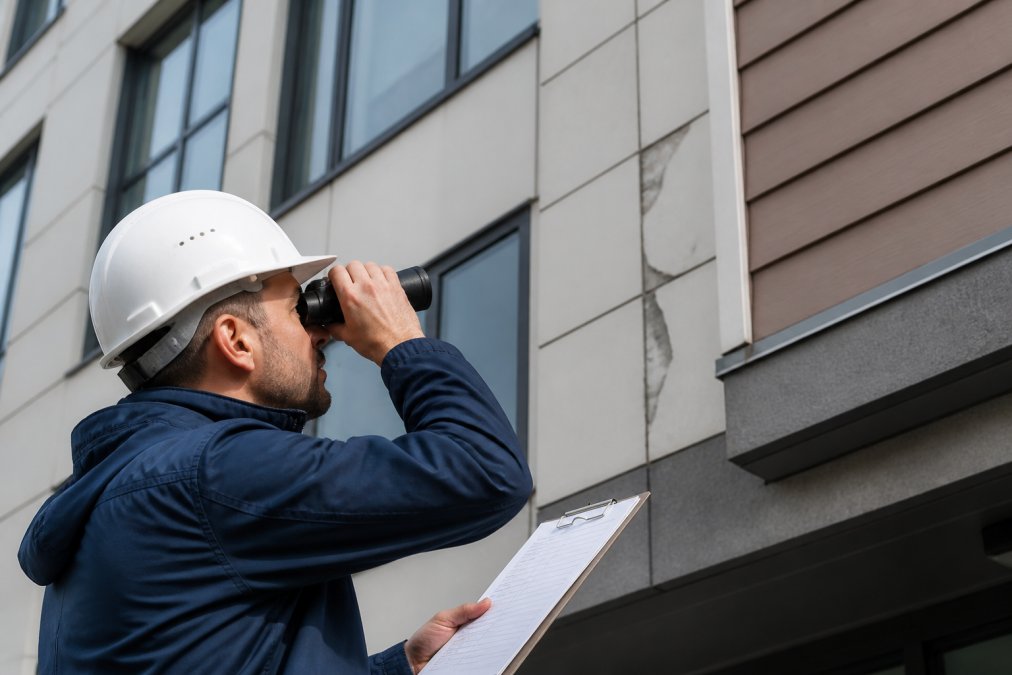
Begin at ground level and work upward. Look for visible cracks, gaps, warping, or discoloration in the cladding. Pay particular attention to areas where different materials meet, corners, transitions, and seams are where water intrusion typically begins. Check for staining patterns that indicate water flow paths. Dark streaks often signal moisture problems developing behind the surface.
What to Look For During Inspection
Water damage shows itself in predictable ways. Look for soft spots in wood siding, rust stains on metal cladding, or efflorescence (white mineral deposits) on masonry. These are red flags that moisture has penetrated the exterior envelope. Peeling paint or coating failure often follows water intrusion, the moisture pushes from behind.
Caulking failures are the most common vulnerability. Cracks, gaps, or missing sealant around windows, doors, and trim allow water to bypass the substrate entirely. Run your finger along seams. If sealant crumbles or pulls away easily, replacement is overdue.
Check for biological growth, mildew, moss, or algae. These organisms indicate moisture retention, which accelerates material degradation. They’re not just unsightly; they’re evidence of failing moisture barriers.
Thermal expansion and contraction stress the building envelope constantly. Look for gaps that open and close seasonally. If sealant can’t flex with the material, it fails. Inspect the substrate beneath failed sealant, you may find rot, corrosion, or deterioration that requires repair before recaulking.
Safety Protocols for Commercial Heights
Never inspect a commercial building exterior without proper fall protection. Heights above 10 feet require OSHA-compliant safety equipment (osha.gov). If you’re not trained in fall arrest systems, rope access, or scaffolding, hire a licensed contractor to perform the inspection.
This isn’t overcaution, it’s legal requirement. OSHA regulations demand that workers at heights above 10 feet be protected by guardrails, safety nets, or personal fall arrest systems. Your liability insurance likely requires documented compliance.
Document the inspection thoroughly. Take photos from multiple angles, note dates, and record specific observations. This documentation protects you legally and creates a baseline for tracking deterioration over time.
Step 2: Clean and Remove Surface Contaminants
Surface contaminants accelerate exterior degradation. Dirt, tree sap, bird droppings, and biological growth trap moisture against the cladding. Cleaning removes these accelerants and reveals the true condition of the substrate.
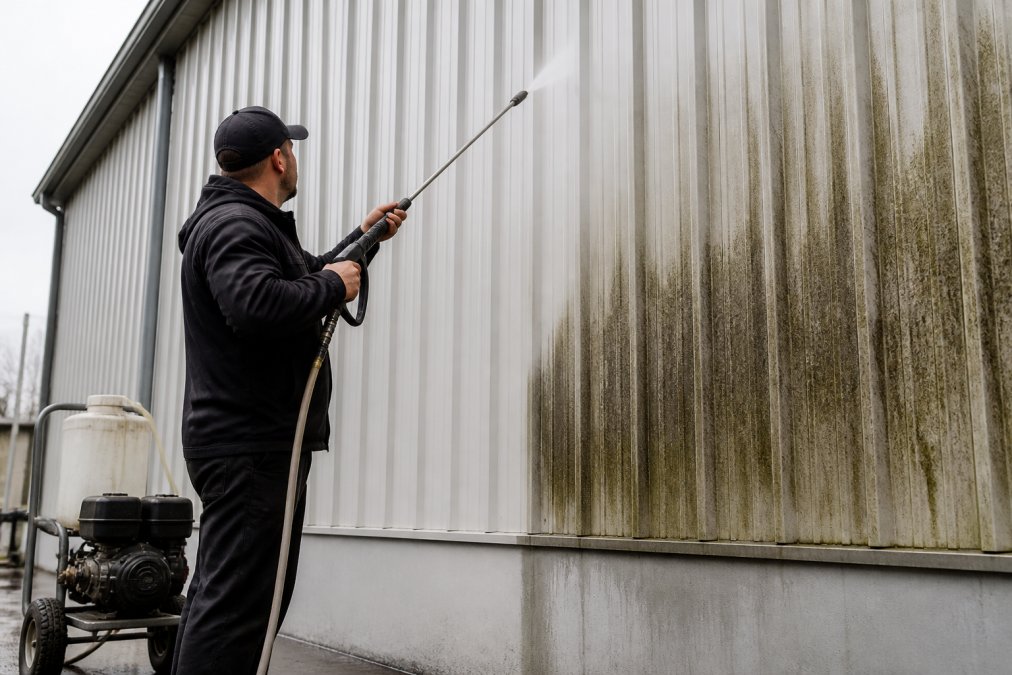
Cleaning is not optional maintenance, it’s preventative. A clean exterior dries faster, resists biological growth, and allows you to spot emerging problems before they become expensive.
Pressure Washing vs. Soft Washing Techniques
Pressure washing uses high-velocity water to blast away contaminants. It’s fast and effective on hard surfaces like concrete or metal. However, high-pressure water can damage softer materials like wood, brick, or stucco. It can force water into seams and behind cladding, creating the moisture problems you’re trying to prevent.
Soft washing uses lower pressure combined with detergent solutions to lift contaminants chemically rather than mechanically. This approach is safer for sensitive materials and less likely to drive water into vulnerable areas. It’s particularly effective for removing biological growth.
For commercial exterior siding, soft washing is typically the better choice. The detergent solution kills mildew, moss, and algae at the source. The low-pressure rinse removes the dead organisms without damaging the substrate.
Choose your pressure carefully. If you use pressure washing, stay below 1,500 PSI for most siding materials. Test on an inconspicuous area first. Watch for water entering seams or backing up behind trim.
Treating Mildew, Moss, and Algae
Biological growth indicates moisture retention and poor drying conditions. Left untreated, these organisms accelerate material degradation. More importantly, they signal underlying moisture problems that cleaning alone won’t fix.
Mildew resistance depends on the substrate and the local climate. Humid climates with limited sun exposure are ideal breeding grounds. Shaded areas of your building will accumulate growth faster than sunny exposures.
Treatment involves applying a biocide solution designed for the specific organism. Bleach-based solutions work on many surfaces but can damage certain materials or create runoff issues. Specialized commercial cleaning solutions are formulated to kill organisms without harming the substrate or the environment.
After treatment, allow the solution to dwell for the time specified by the product. Then rinse thoroughly. Debris removal, dead algae and moss, is critical. Pressure washing or soft washing removes the dead material, preventing it from trapping moisture against the cladding.
Prevention is more effective than treatment. Improve drainage around the building. Trim vegetation that shades the siding. Ensure gutters and downspouts direct water away from the exterior envelope. These changes reduce moisture retention and slow biological growth recurrence.
Step 3: Address Caulking and Sealant Integrity
Caulking and sealant failures are the leading cause of water intrusion in commercial buildings. Sealants fail because they lose flexibility, crack from thermal expansion, or simply age out. A failed sealant is an open door for water.
Sealant integrity directly affects your building envelope. Water that enters through failed caulking travels behind the cladding, where it can’t evaporate. This leads to rot, corrosion, mold, and structural damage.
Inspect sealant around all penetrations: windows, doors, trim, and material transitions. Look for cracks, gaps, or separation from the substrate. If sealant pulls away from the joint, it’s failed and needs replacement.
Recaulking is not a permanent fix. Most sealants last 10-15 years depending on climate and material compatibility (peer-reviewed research). Plan recaulking as a regular maintenance cycle, not an emergency repair. Scheduling it during dry seasons gives the sealant time to cure properly.
When recaulking, remove the old sealant completely. Partial removal leaves voids where water can hide. Clean the joint with solvent to remove dirt and debris. Apply new sealant that matches the joint width and material movement. Smooth the sealant with a wet tool to ensure full contact with the substrate.
Use sealants rated for the specific application and materials. Exterior-grade sealants rated for joint movement are essential. Polyurethane and silicone sealants offer superior flexibility and durability compared to acrylic caulk.
Step 4: Manage Vegetation and Debris
Vegetation growing against your building traps moisture and blocks air circulation. Ivy, vines, and overgrown shrubs create ideal conditions for mildew and algae. They also hide damage developing behind them.
Debris accumulation in gutters, corners, and seams prevents proper drainage and water flow. Leaves, branches, and dirt trap moisture against the cladding. Regular debris removal is simple maintenance that prevents expensive damage.
Establish a quarterly vegetation management schedule. Trim shrubs and trees away from the building. Remove ivy and vines completely. Clear gutters and downspouts of leaves and debris. Ensure water flows away from the foundation and exterior walls.
Pay special attention to areas where vegetation naturally accumulates, corners, areas beneath trees, and low-lying sections. These zones need more frequent attention.
Proper vegetation management also improves curb appeal and allows you to inspect the building envelope effectively. You can’t assess siding condition if it’s hidden behind overgrown vegetation.
Understanding Commercial Siding Repair Costs and Tax Deductions
Maintenance and repairs are business expenses, but the tax treatment depends on the nature of the work. Understanding this distinction protects your bottom line and ensures you’re claiming legitimate deductions.
Budgeting for Commercial Siding Repair Costs
Repair costs vary dramatically based on the scope of work, building height, material type, and local labor rates. Small repairs like recaulking a few seams cost far less than replacing damaged substrate or addressing water intrusion damage.
Factors affecting cost include building height (commercial heights require specialized equipment and safety protocols), material type (metal cladding, wood siding, and composite materials have different repair approaches), extent of damage (surface stains versus structural rot), and contractor expertise (specialized contractors cost more but deliver better results).
Budget for maintenance as an ongoing line item. Many property managers allocate 1-3% of the building’s value annually for exterior maintenance (boma.org). This creates predictable costs and prevents emergency repairs from straining your budget.
Get multiple quotes for major repairs. Different contractors may recommend different approaches. Compare not just price but also warranty, timeline, and the contractor’s experience with your specific building material.
Tax Deductibility of Commercial Exterior Repairs
The IRS distinguishes between repairs (deductible) and improvements (capitalized and depreciated). Repairs restore property to its original condition. Improvements enhance the property beyond its original state or extend its useful life significantly.
Recaulking, cleaning, and treating biological growth are typically repairs, deductible in the year incurred. Replacing damaged siding, repainting the entire exterior, or upgrading to new materials are improvements, capitalized and depreciated over time.
This distinction matters for tax planning. Repairs reduce taxable income immediately. Improvements are depreciated over several years, providing smaller annual deductions.
Consult a tax professional before undertaking major exterior work. Proper classification ensures you claim maximum deductions while maintaining IRS compliance. Documentation is critical, keep receipts, invoices, and descriptions of work performed.
Repainting and Refinishing Schedules
Paint and coating systems protect the substrate from UV degradation, moisture intrusion, and weathering. As these systems fail, the underlying material begins to deteriorate. Repainting on schedule is preventative maintenance, not cosmetic work.
Repainting cycles depend on climate, material type, and coating quality. In harsh climates with significant UV exposure, repainting every 5-7 years is typical. In moderate climates, 7-10 years is reasonable. Premium coatings last longer but cost more initially.
Before repainting, address any underlying issues. Failing caulking, biological growth, or substrate damage must be repaired first. Paint won’t solve these problems, it will trap moisture and accelerate deterioration.
Surface preparation is critical for coating longevity. Pressure washing removes loose paint and contaminants. Sanding or chemical stripping removes failed coating. The substrate must be clean and dry before new coating is applied.
Choose coatings appropriate for the material and climate. Acrylic latex paints work well on most substrates. Elastomeric coatings provide superior flexibility and crack resistance. Specialty coatings offer enhanced UV resistance or mildew prevention.
Document your repainting schedule. Track when work was performed and what products were used. This documentation helps you anticipate future maintenance needs and provides evidence of proper stewardship if insurance claims arise.
Maintaining commercial exterior siding requires systematic inspection, timely cleaning, and planned repairs. The steps outlined here create a framework that protects your building envelope and prevents costly emergency repairs. When maintenance needs exceed your in-house capabilities, professional contractors with experience in commercial exterior systems can provide the expertise required for complex repairs and specialized treatments. Contact EFER Renovations Inc. today for a no-obligation assessment of your building’s exterior condition and a customized maintenance plan that fits your budget and timeline.
Frequently Asked Questions
Q: How often should commercial siding be inspected?
A: Commercial siding should be inspected at least twice yearly, spring and fall, to catch water intrusion, UV degradation, and thermal expansion damage early. High-traffic areas or buildings in harsh climates may need quarterly inspections. A proactive maintenance schedule prevents costly repairs and extends the life of your building envelope.
Q: Is commercial roof repair tax deductible?
A: Commercial roof and exterior repairs are typically tax deductible as ordinary and necessary business expenses under IRS guidelines, provided they maintain the property’s current condition. However, capital improvements that extend the asset’s useful life may require depreciation over time rather than immediate deduction. Consult a tax professional to determine whether your specific repair qualifies as maintenance or improvement for your situation.
Q: What is the average lifespan of commercial exterior siding?
A: Most commercial siding materials last 20-40 years depending on material type, climate exposure, and maintenance frequency. Vinyl and metal cladding typically last 20-30 years, while fiber cement can reach 25-40 years with proper upkeep. Regular cleaning, sealant integrity checks, and preventative maintenance significantly extend asset longevity and curb appeal.
Q: How do professionals clean commercial siding without damage?
A: Professionals use soft washing techniques with low-pressure detergent solutions rather than high-pressure washing, which can force water intrusion and damage the substrate. A soft-bristled brush combined with appropriate cleaning agents removes surface stains, tree sap, and debris safely. Always test solutions on inconspicuous areas first and rinse thoroughly to prevent sealant degradation.
This article was written using GrandRanker