
Table of Contents
- Visible Cracks and Fractures in Siding Panels
- Warping, Buckling, and Bowing of Your Exterior Cladding
- Signs of Water Damage Behind Siding
- Rot, Soft Spots, and Structural Integrity Issues
- Peeling Paint, Blistering, and Discoloration
- Mold, Mildew, and Fungus Growth on Siding
- Pest Intrusion, Loose Boards, and Missing Panels
- Increased Energy Bills and Insulation Value Loss
Last Updated: August 28, 2026
Visible Cracks and Fractures in Siding Panels
Cracks and fractures in your siding are warning signs that you need new house siding. These openings allow moisture, pests, and cold air to penetrate your home’s exterior. Even hairline fractures expand over time due to thermal expansion, especially in climates with significant temperature swings.
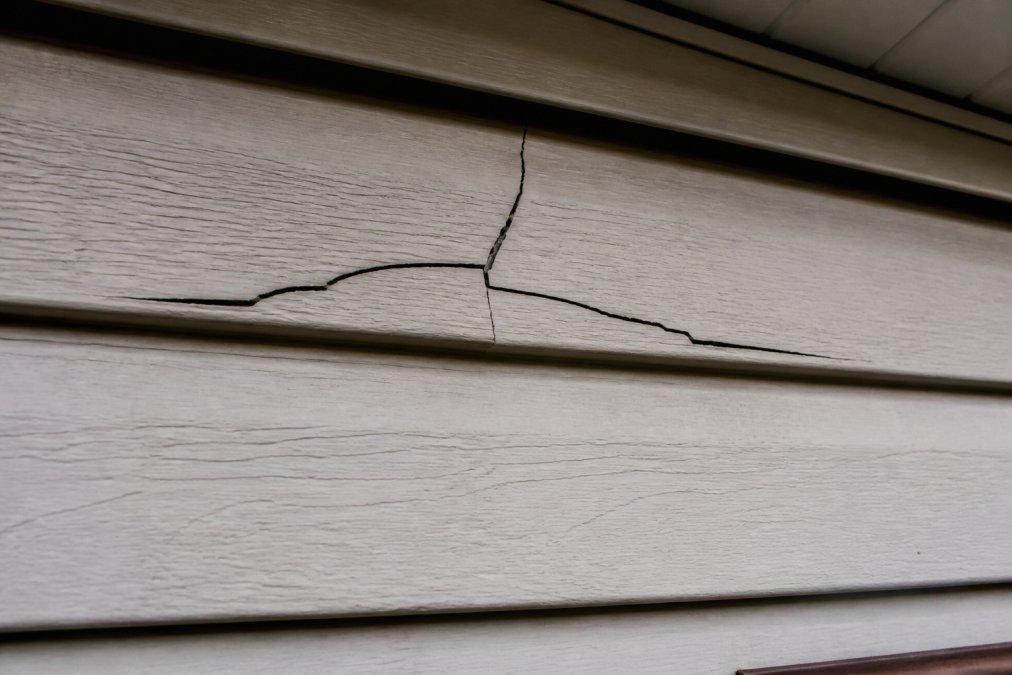
Vinyl siding cracks from UV damage or extreme cold, while fiber cement develops stress fractures from impact or settling. Any crack wider than a quarter-inch warrants attention (nist.gov). Once moisture penetrates behind your siding, it damages the sub-siding and insulation beneath, leading to expensive repairs.
Look for cracks at corners, around windows and doors, and near the foundation where settling stress concentrates. Multiple cracks across different panels signal systemic failure rather than isolated damage.
Press gently on cracked areas with a screwdriver. If the underlying material feels soft or spongy, moisture has already penetrated and caused structural damage. This is a red flag for professional inspection.
Warping, Buckling, and Bowing of Your Exterior Cladding
Warping, buckling, and bowing indicate that siding panels no longer lie flat against your home’s structure. This happens when moisture causes uneven expansion or when the underlying structure shifts. Buckling appears as a visible wave running vertically along a panel, while bowing shows a gradual curve across the surface.
Poor installation that doesn’t account for thermal expansion, or aging fasteners that have loosened, allows panels to move independently. Water damage accelerates the process as wet material swells unpredictably.
Walk around your home’s perimeter and look at panels from an angle where light rakes across the surface. Warped sections catch light differently than flat ones. Run your hand along the siding to feel for bulges or depressions.
Buckling and bowing are progressive problems that don’t stabilize on their own. Deformed panels create gaps where water pools, accelerating further damage and signaling the need for new house siding.
Signs of Water Damage Behind Siding
Water damage behind siding is often invisible until severe. Soft spots on siding panels indicate water saturation. Press your thumb against different areas; sound panels resist pressure while water-damaged sections feel spongy.
Discoloration, dark streaks, or mold-like patches suggest water is running down the surface or pooling behind it. Check the bottom edge of each panel and around trim. Water damage often appears as darkening or warping at junction points. Wood siding shows darker, swollen areas where paint peels in clusters.
Interior signs matter too. Water stains on interior walls, soft drywall, or musty smells in rooms adjacent to exterior walls indicate water has penetrated the siding system. Insulation may be wet and losing its value.
Check around windows, doors, and where different siding materials meet. Caulk that’s cracked, missing, or pulling away is a direct pathway for water infiltration.
If you find soft spots or water damage behind siding, do not delay. Water damage spreads quickly and can compromise structural integrity. Mold growth begins within 24-48 hours of moisture exposure ([the CDC](https://www.cdc.gov/mold-health/about/index.html)). This is when you need new house siding or at minimum a professional assessment.
Rot, Soft Spots, and Structural Integrity Issues
Dry rot and wet rot are the most serious threats to your home’s structural integrity. Rot occurs when moisture allows fungal growth to consume wood fibers in your siding or framing beneath it. Unlike surface damage, rot weakens the actual material, making it unable to support loads or resist wind pressure.
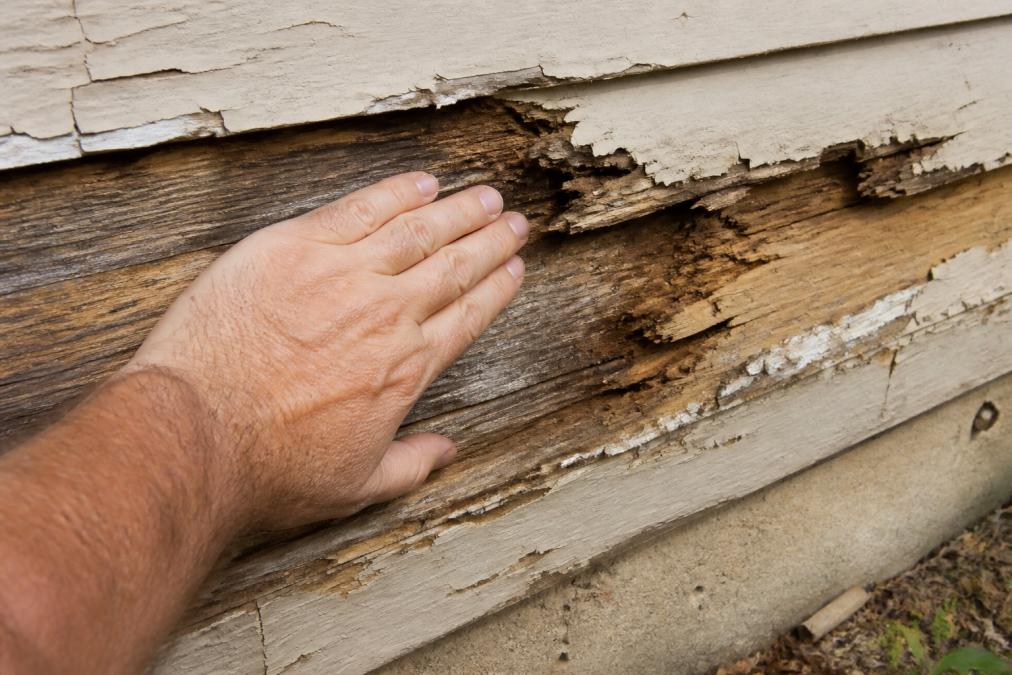
Soft spots are the diagnostic sign of rot. Use a screwdriver or awl to probe suspect areas; a sharp tool should not penetrate sound wood easily, but it slides into rotted wood with little resistance. Pay special attention to lower portions of siding panels where water collects, and around areas where siding meets the foundation or trim.
Wood siding is most vulnerable to rot, but fiber cement panels can also develop soft spots if water penetrates cracks or fastener holes. Vinyl siding itself doesn’t rot, but water behind vinyl saturates the wood sheathing or insulation beneath, which rots and leaves siding unsupported.
Structural integrity issues manifest as loose siding, panels that shift when pushed, or visible separation between panels and trim. When siding no longer provides a tight seal, it’s not protecting your structure, and you need new house siding.
Peeling Paint, Blistering, and Discoloration
Peeling paint and blistering signal that your siding’s protective coating is failing. Paint peels when moisture gets trapped between paint and substrate, or when UV exposure breaks down the paint bond. Blistering occurs when water vapor pushes the paint layer away from the surface.
Discoloration, fading, dark streaks, or uneven color indicates UV damage, mold growth, or mineral deposits from water runoff. UV exposure breaks down the resin in vinyl siding and binders in fiber cement, making material brittle and prone to cracking.
When peeling paint affects large areas, repainting becomes temporary at best. Paint won’t adhere properly if moisture is present. If your siding requires painting every 3-5 years, the underlying material is likely nearing the end of its lifespan.
Check paint condition on all sides of your home. South and west-facing sides weather faster. If one side peels badly while others are fine, the siding itself is failing. Peeling at seams, fasteners, or trim indicates water is entering at those points, signaling the need for new house siding.
Mold, Mildew, and Fungus Growth on Siding
Mold and mildew thrive in moist conditions. Black, green, or brown growth on siding, especially on north-facing or shaded sides, indicates moisture is accumulating on or behind the surface. Your siding is retaining water rather than shedding it.
Surface mold can sometimes be cleaned, but persistent growth means the environment is too moist. This happens when siding is damaged, gutters fail to direct water away, or the siding material has lost its water-repellent properties. Older siding becomes increasingly porous and holds moisture longer.
Fungal growth is also a health concern. Mold spores can become airborne and enter your home. Families with allergies or respiratory sensitivities are especially vulnerable.
Look for mold in shadiest areas, under eaves, on north-facing walls, and around downspouts. Mold that returns quickly after cleaning indicates the underlying moisture problem hasn’t been solved. Widespread mold across your home’s exterior signals it’s time to replace siding with material that sheds water more effectively.
Persistent mold on siding means water management is failing. Cleaning treats the symptom, but replacing the siding addresses the root cause.
Pest Intrusion, Loose Boards, and Missing Panels
Gaps, cracks, and loose sections in siding are direct invitations to insects and rodents. Carpenter ants, termites, and other pests exploit openings to access wood framing and insulation inside your walls. Once inside, they cause damage far exceeding the cost of new siding.
Loose or missing panels expose sub-siding, insulation, and framing directly to weather. Even one missing panel allows rain to penetrate. Loose panels that rattle or shift indicate fasteners have corroded or failed, or the underlying structure has warped.
Inspect all visible fasteners; nails and screws should be flush with the siding surface. Corroded fasteners are weak and no longer hold panels securely. Rust stains around fasteners indicate moisture is present, likely accelerating wood decay beneath.
Look for small holes, tunnels, or sawdust-like material (frass) on siding. Carpenter ant galleries appear as smooth tunnels in wood. Termite damage shows as mud tubes or frass accumulating at panel bases. By the time you see obvious signs, significant damage has occurred inside your walls.
If you’re finding insects inside your home more frequently, your siding no longer provides an effective pest barrier. This is when you need new house siding with sealed seams and proper installation.
Increased Energy Bills and Insulation Value Loss
Your siding is part of your home’s thermal envelope. When siding fails, insulation value drops dramatically. Air leaks through cracks and gaps, and moisture-damaged insulation loses its ability to resist heat transfer, resulting in higher heating and cooling costs.
If energy bills have increased noticeably without changes in usage or utility rates, your home’s exterior envelope is likely compromised. HVAC systems work harder to maintain temperature when the building envelope fails.
Thermal imaging reveals where your home loses heat. Cold spots on exterior walls indicate air leaks or wet insulation. Drafts near windows and doors, or cold spots on interior walls, suggest siding gaps are allowing outside air inside.
New siding with proper insulation and air sealing reduces energy consumption immediately. When you combine increased energy costs with other signs, cracks, water damage, rot, or pest activity, the case for new siding becomes clear.
Request an energy audit from your utility company. Many offer these services free or at low cost. An audit will identify whether your siding is a significant source of energy loss.
Making the Repair vs. Replace Decision
Not every siding problem requires full replacement. Small areas of damage, a few cracked panels, or isolated soft spots can sometimes be repaired by replacing individual sections. However, this only works if the underlying cause has been fixed and the rest of your siding is sound.
If you’re seeing multiple types of damage across your home, full replacement is more cost-effective than patching. Piecemeal repairs on failing siding create a patchwork of new and old materials that age at different rates.
Consider the age of your siding. Most vinyl siding lasts 20-40 years, fiber cement 25-40 years, and wood siding 15-40 years (the EPA). If your siding is approaching the end of its expected lifespan and showing multiple failure signs, replacement makes more sense than continued repairs.
At EFER Renovations Inc., we help homeowners evaluate whether repair or replacement is the right choice. Our team assesses the extent of damage, identifies underlying causes, and recommends the most cost-effective solution. A professional inspection reveals hidden damage, establishes whether the problem is localized or systemic, and provides a clear picture of what your siding will need in coming years.
When you notice cracks spreading across your siding, water stains appearing on interior walls, or energy bills climbing without explanation, it’s time to act. EFER Renovations Inc. has spent over 13 years helping homeowners across the region restore their exterior cladding with high-quality siding replacement. Our GAF and Owens Corning certified contractors handle everything from initial assessment to final installation, and we work directly with insurance companies to simplify claims when storm damage is involved. Contact us today for a no-obligation estimate and expert guidance on whether your home needs new house siding.
Frequently Asked Questions
Q: How often should house siding be replaced?
A: Most vinyl siding lasts 20-40 years, fiber cement 25-40 years, and wood siding 20-40 years depending on climate and maintenance. Hail damage, UV exposure, and moisture infiltration can shorten this timeline significantly. Have your siding inspected every 5-10 years to catch issues early and plan replacement before major structural damage occurs.
Q: What is the average lifespan of house siding?
A: Vinyl siding typically lasts 20-40 years, fiber cement 25-40 years, and wood siding 20-40 years. The actual lifespan depends on material quality, installation, local climate, and maintenance. In regions with extreme weather, thermal expansion and UV exposure can reduce lifespan. Professional inspection helps determine if your siding is reaching end-of-life.
Q: What happens if you don't replace siding on a house?
A: Ignoring damaged siding allows moisture infiltration, leading to dry rot, mold growth, and structural damage to sub-siding and framing. This compromises your home's insulation value, raising energy bills. Pest intrusion becomes likely, and water damage spreads to interior walls. Delaying replacement typically costs more in emergency repairs and can affect your home's resale value and curb appeal.
Q: Is it worth replacing siding on a house?
A: Yes, siding replacement improves curb appeal, boosts home value, and prevents costly water damage and structural repairs. New siding restores energy efficiency, reduces maintenance costs, and protects your home's structural integrity. For homeowners planning to stay long-term or sell, the return on investment is significant. Contact us for a free estimate to understand the true cost-benefit for your situation.
This article was written using GrandRanker