
Table of Contents
- Start With the 60-30-10 Color Rule
- Match Your Siding With Roof Shingles
- Consider Your Architectural Style and Neighborhood Context
- Best Siding Colors for Resale Value
- How Lighting, Shadows, and Undertones Shape Your Choice
- Using Siding Color Visualizer Tools
- Climate, Maintenance, and Long-Term Color Performance
- Conclusion
- Frequently Asked Questions
Last Updated: September 3, 2026
Start With the 60-30-10 Color Rule
The 60-30-10 color rule is a design principle that allocates 60% of your exterior to a dominant color, 30% to a secondary color, and 10% to accent colors. This framework creates visual balance and prevents your home from feeling chaotic or overwhelming.
When you choose siding color using this rule, the dominant hue typically covers your main wall surfaces. The secondary color usually appears on trim, soffit, or fascia. The accent color, 10% of the total, shows up in doors, shutters, or architectural details.
The reason this rule works is simple: our eyes process visual information in hierarchies. Too many competing colors confuse the eye and diminish curb appeal. Too few colors make a home feel flat and uninspired. The 60-30-10 split hits the sweet spot.
Start by identifying which color will dominate. This is usually your siding choice. Then select a complementary secondary color for trim and accents. Test these combinations by looking at actual samples on your home at different times of day. Morning light, afternoon sun, and evening shadows will all shift how colors appear. Many homeowners find that what looks perfect on a small paint chip can feel entirely different across an entire wall.
Order multiple large color samples from your siding manufacturer and tape them to different wall sections. Leave them up for 3-5 days, observing them in morning, afternoon, and evening light. This investment in time eliminates costly color regrets later.
Match Your Siding With Roof Shingles
Your roof and siding are the two largest color surfaces on your home. They either work together or compete for attention. Matching siding with roof shingles is non-negotiable for a cohesive exterior.
Start by examining your existing roof color, or the roof color you’re planning if you’re replacing both simultaneously. Most roofs fall into warm tones (browns, reds, blacks with warm undertones) or cool tones (grays, blacks with cool undertones). Your siding choice must complement this, not clash.
Warm-toned roofs pair well with warm siding colors: creams, warm grays, soft browns, or warm whites. Cool-toned roofs work better with cool siding: cool grays, soft blues, cool whites, or charcoal tones. The undertone matters more than the base color itself.
This is where many homeowners stumble. They pick a beautiful siding color in isolation, then discover it looks jarring against their roof. The fix requires either changing one or the other, an expensive correction. Prevent this by testing your siding color against actual roof samples or high-quality photographs of your roof in natural light.
If you’re replacing both roof and siding, you have more flexibility. Work with a designer or contractor who understands color harmony. They can guide you toward combinations that feel intentional rather than accidental. EFER Renovations Inc. helps homeowners navigate these decisions by providing visualizations and professional guidance before any installation begins.
Never select siding color without seeing it next to your actual roof. The two largest color surfaces on your home must work in harmony, not opposition.
Consider Your Architectural Style and Neighborhood Context
Your home’s architectural style dictates which siding colors will look authentic and which will feel out of place. A Victorian home painted in bold modern colors looks confused. A contemporary farmhouse in traditional colonial tones loses its intended character.
Research your home’s architectural style first. Colonial, ranch, farmhouse, modern, craftsman, Mediterranean, and contemporary each have color traditions that work. This doesn’t mean you must follow them rigidly, but understanding the conventions gives you a foundation for making intentional choices.
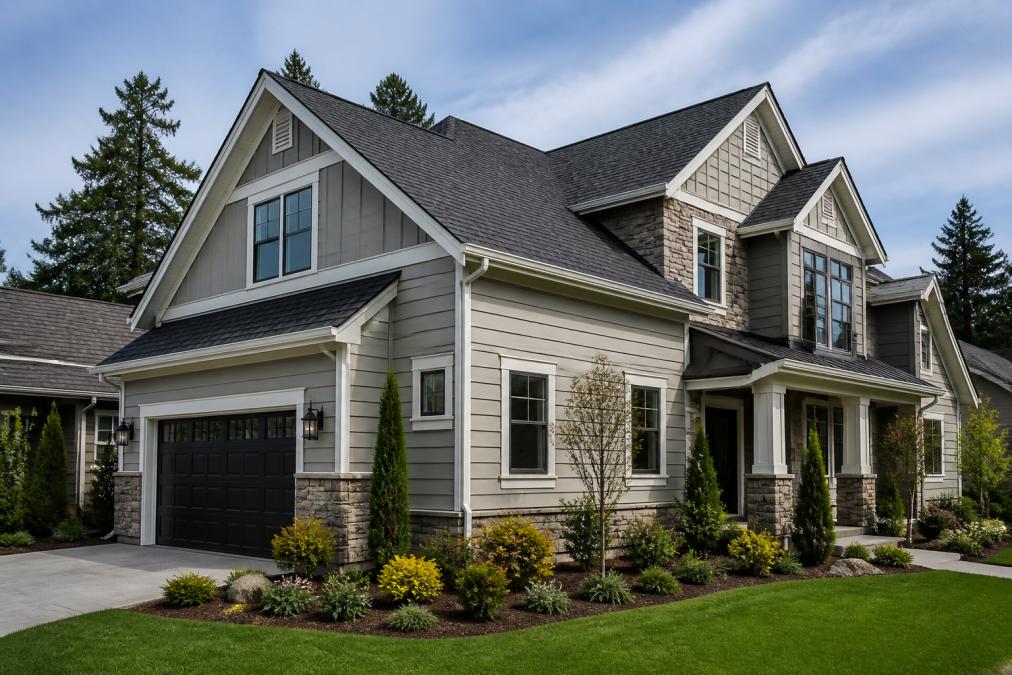
Beyond your home’s style, observe your neighborhood context. Drive or walk through your area and notice what colors dominate. This isn’t about matching everyone else, it’s about understanding the visual landscape your home sits within. A home that stands out dramatically from its surroundings can feel jarring rather than distinctive.
Neighborhood context matters more than many homeowners realize. Homes with cohesive exterior colors that complement their surroundings consistently show higher perceived property values (peer-reviewed research). This is partly psychology: a home that feels intentional and well-maintained attracts more positive attention.
Consider the trees, landscaping, and natural features around your property too. Green trees and shrubs create a backdrop that influences which siding colors will pop and which will recede. A deep charcoal siding might disappear into tree shadows in a heavily wooded setting. A light cream might feel washed out in the same location.
Best Siding Colors for Resale Value
If you’re thinking about future resale, siding color strategy becomes more conservative. Neutral colors, soft grays, warm whites, cool whites, and warm beiges, consistently appeal to the broadest buyer pool. These colors feel safe, timeless, and compatible with most architectural styles.
Bold or trendy siding colors carry risk. A striking deep blue or forest green might feel beautiful to you, but it narrows your potential buyer base. Many buyers struggle to visualize themselves in a home with bold exterior colors, even if they could repaint later.
Research shows that neutral siding colors don’t guarantee higher resale value, but they remove a potential objection. Buyers focus on structural integrity, location, and interior condition, not exterior color. However, a well-maintained home with cohesive, neutral exterior colors typically shows better curb appeal, which influences initial perception and showing rates.
If resale value concerns you, stick with timeless neutrals for your dominant siding color. Save bold or trendy choices for accent colors, doors, shutters, or trim, where they add personality without overwhelming the entire exterior. This approach gives you style flexibility while maintaining broad market appeal.
The best siding colors for resale value are those that look intentional and well-maintained rather than trendy or experimental. Neutral palettes paired with quality materials and excellent upkeep always outperform bold choices when it comes to long-term property value perception.
How Lighting, Shadows, and Undertones Shape Your Choice
Color doesn’t exist in a vacuum, it exists in light. The same siding color looks dramatically different in morning sun, afternoon heat, and evening shade. This is why paint chips and digital visualizations can mislead you.
Undertones are the hidden colors within a color. A gray that looks cool in a showroom might have warm undertones that shift to taupe in afternoon light (peer-reviewed research). A white that appears crisp indoors might look yellow or pink depending on the light source. Understanding undertones helps you predict how a color will behave throughout the day.
Shadows cast by trees, adjacent structures, and roof overhangs create constant shade variation on your home’s exterior. A siding color that looks perfect in full sun might feel too dark or too cold in perpetually shaded areas. Conversely, a light color in shade might look washed out in direct sun.
The best approach is to observe your home’s light patterns over a full day. Notice where shadows fall in morning, midday, and evening. Pay attention to seasonal changes, winter sun hits at a lower angle than summer sun. Then place large color samples in these different zones and observe them for several days.
North-facing walls receive less direct sun and tend toward cooler light. South-facing walls get intense afternoon heat and warm light. East-facing walls see bright morning sun. West-facing walls experience hot afternoon exposure. Your siding color choice might need to account for these directional differences, or you might choose a color that performs well across all exposures.
Selecting siding color based on a small sample in indoor lighting is the most common mistake. What looks perfect under fluorescent showroom lights often looks completely different on your actual home exterior. Always test large samples in natural outdoor light for multiple days before committing.
Using Siding Color Visualizer Tools
Digital siding color visualizer tools have improved significantly, but they remain imperfect approximations. These tools let you upload a photo of your home and apply different siding colors digitally to see potential results.
The benefit is obvious: you can test dozens of color combinations without physical samples. The limitation is equally important: digital renderings don’t account for lighting variation, shadow patterns, or how colors shift throughout the day. They also often overestimate color saturation and underestimate undertone shifts.
Use visualizer tools as a starting point, not a final decision. They’re excellent for narrowing your choices from dozens of options to a few finalists. Once you’ve identified 2-3 colors that appeal to you digitally, order physical samples and test them on your actual home.
Most siding manufacturers provide online visualizer tools on their websites. Some are basic; others are more sophisticated. The best tools let you upload multiple photos of your home from different angles and times of day. A few allow you to adjust lighting conditions to simulate morning, afternoon, and evening light.
Complementing a visualizer tool with professional guidance accelerates the decision. EFER Renovations Inc. uses visualization technology alongside professional color consultation to help homeowners see realistic options before installation. This combination of digital tools and expert perspective reduces uncertainty and second-guessing.
Digital visualization is a helpful decision-making aid, but it should never be your only tool. Combine it with physical samples, neighborhood observation, and professional input for the most confident choice.
Climate, Maintenance, and Long-Term Color Performance
Siding color choice has practical maintenance implications that extend beyond aesthetics. Dark colors absorb more heat and sun exposure, which can accelerate fading and material degradation. Light colors reflect heat but show dirt and stains more readily. Neither is inherently superior, they just require different maintenance approaches.
In hot climates, light and reflective siding colors help reduce heat absorption and can lower cooling costs slightly (energy.gov). However, they require more frequent cleaning to maintain appearance. Dark colors hide dirt better but fade faster under intense UV exposure and may require more frequent repainting or refinishing over time.
In cooler climates, color performance becomes less about heat absorption and more about how well the material weathers seasonal changes. Freeze-thaw cycles, heavy snow loads, and salt exposure in coastal areas all affect siding durability regardless of color. The siding material itself matters more than color in these conditions.
Maintenance schedules differ by color and material. Vinyl siding in dark colors might need cleaning every 1-2 years in sunny climates. Light vinyl siding in the same climate might need cleaning every 2-3 years but shows dirt sooner. Fiber cement and wood siding have their own color-specific maintenance needs.
Consider your willingness and ability to maintain your chosen color long-term. A stunning deep charcoal might require annual professional cleaning to stay beautiful. A warm white might show every dust particle but need less frequent intervention. Neither choice is wrong, just make sure you’re prepared for the maintenance reality.
The climate where you live influences how quickly colors fade and how often maintenance becomes necessary. Understanding these trade-offs helps you choose a siding color you can maintain successfully for the 20-30 year lifespan of the material.
Before finalizing your siding color, ask your contractor about typical maintenance schedules for that specific color in your climate. Factor this into your decision if maintenance time or cost concerns you.
Conclusion
Choosing siding color requires balancing design principles, practical constraints, and personal preference. Start with the 60-30-10 color rule to create visual harmony. Match your siding color with your roof shingles to ensure cohesion. Consider your architectural style and neighborhood context to make choices that feel intentional. Test colors in natural light over multiple days before committing.
If resale value matters to you, neutral siding colors provide the safest long-term choice. Understand how lighting and undertones shift your color perception. Use digital visualization tools as a starting point, not a final decision. Account for climate and maintenance realities in your selection.
When you’re ready to move from planning to installation, EFER Renovations Inc. brings 13 years of experience helping homeowners navigate exterior decisions. Our team provides professional color consultation, uses visualization technology to show realistic results, and installs siding with the workmanship quality that ensures your choice looks great for decades. We offer quick, no-obligation estimates and work directly with your insurance if you’re combining siding replacement with other exterior repairs.
Contact EFER Renovations Inc. today to discuss your siding color strategy and get started with a professional exterior transformation.
Frequently Asked Questions
What is the most popular siding color right now?
Neutral tones dominate current trends, with soft grays, warm whites, and muted earth tones leading the market. These colors offer timeless appeal, work across architectural styles, and maintain strong resale value. However, popularity varies by region and neighborhood context. The best approach is to evaluate what complements your specific roof color, stone accents, and surrounding homes rather than chasing trends.
Does siding color affect home resale value?
Yes, siding color significantly impacts curb appeal and buyer perception, which directly influence resale value. Neutral, cohesive color schemes that harmonize with the roof and trim typically appeal to the widest buyer pool and command stronger returns. Bold or unusual colors may limit your market, while timeless aesthetics hold value longer. Colors that show poor fading resistance or require excessive maintenance can also reduce perceived property value.
Can I use a siding color visualizer tool to see how colors look on my house?
Yes, siding color visualizer tools allow you to upload photos of your home and preview different color palettes digitally. These tools help you evaluate how undertones, lighting, and shade interact with your specific roof and trim before committing. However, visualizers cannot fully account for natural light changes throughout the day or seasonal variations. Always order physical color samples and view them on your actual home in different lighting conditions to confirm your choice.
Should I choose light or dark siding?
Both light and dark siding work well when chosen thoughtfully. Light colors enhance curb appeal, appear to expand the home’s visual footprint, and require less frequent cleaning. Dark colors create bold contrast, age gracefully, and hide dirt well. The right choice depends on your roof color, architectural style, neighborhood context, climate, and maintenance preferences. Dark colors absorb more heat in sunny climates, while light colors reflect it. Test both options using samples and visualization tools before deciding.
This article was written using GrandRanker