
Table of Contents
- How Gutters Affect Foundation Stability
- Common Signs of Foundation Damage from Water
- Water Pooling and Drainage Issues
- How to Fix Water Pooling Near Foundation
- Gutter Downspout Extension Requirements
- Signs of Soil Erosion Around Foundation
- When to Call a Professional Foundation Inspector
- Preventative Maintenance for Your Gutters
- Frequently Asked Questions
Last Updated: August 29, 2026
How Gutters Affect Foundation Stability
Your gutters are your foundation’s first line of defense against water damage. When they fail, water that should be directed away pools against the foundation, creating hydrostatic pressure that destabilizes the soil beneath your home and pushes against foundation walls.
The mechanics are straightforward: gutters collect roof runoff and channel it through downspouts away from the perimeter. When gutters clog, overflow, or lack proper downspout extensions, water dumps directly onto surrounding soil. That soil becomes saturated, expands, and shifts. The foundation settles unevenly. Cracks appear. Doors stick. Floors slope. What started as a gutter maintenance issue becomes a structural problem costing tens of thousands to repair.
At EFER Renovations Inc., we understand the critical link between gutter problems and foundation damage. Many homeowners don’t connect gutter problems to foundation damage until it’s already visible. By then, water has been working against the foundation for months or years.
Common Signs of Foundation Damage from Water
Foundation damage from water reveals itself through a cluster of subtle indicators that compound over time. The sooner you recognize these signs, the sooner you can address the underlying drainage problem.
Cracks in Walls, Floors, and Ceilings
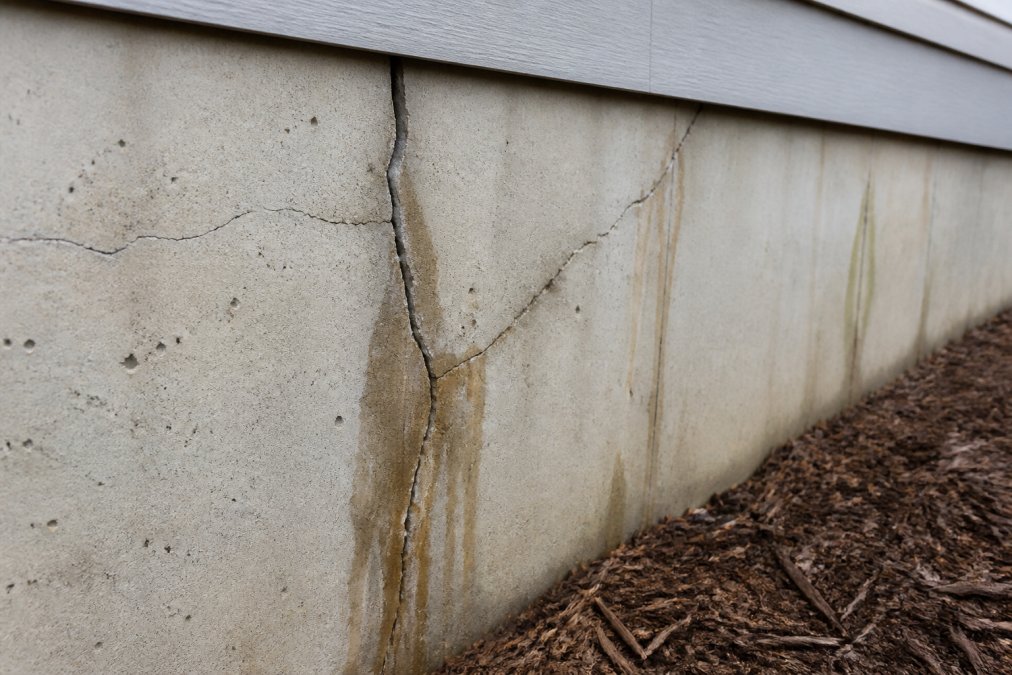
Hairline cracks in your foundation or basement walls are structural signals. When soil saturates and expands around your foundation, it exerts pressure that causes the foundation to shift, cracking concrete and masonry.
Pay attention to crack patterns. Vertical cracks often indicate foundation settlement or heave. Diagonal cracks at 45-degree angles suggest structural stress from uneven pressure. Horizontal cracks are most serious: they indicate severe hydrostatic pressure pushing inward on the foundation wall. If you see horizontal cracks, you have an active water problem.
Cracks don’t stay small. Water seeps in, freezes in winter, expands, and widens the crack further. A hairline crack this year becomes a half-inch gap in three years.
Sticking Doors and Windows
When a door or window suddenly sticks, the real culprit is usually foundation movement. As the foundation shifts due to soil saturation and uneven settling, the frame of your house subtly distorts. Doorways and window openings are the first places this becomes noticeable.
Sticking doors are a reliable indicator of foundation gutter damage because they respond quickly to changes in soil moisture. If doors stick worse during or after heavy rain, that’s a direct signal that water pooling near your foundation is causing active settling.
Uneven or Sloping Floors
Floors that slope, dip, or feel uneven are responding to foundation settling beneath them. When soil under one section of the foundation becomes more saturated than soil under another, that area settles more, creating the slope you feel underfoot.
Uneven floors are particularly common in basements because they’re closest to the foundation and most exposed to subsurface water.
Water Pooling and Drainage Issues
Water pooling against your foundation is the root cause of most foundation gutter damage. This happens when gutters overflow, downspouts are too short, or grading slopes toward the foundation instead of away from it. Standing water creates sustained hydrostatic pressure that forces water through concrete pores and pushes against the foundation structure.
The problem compounds seasonally. In spring and after heavy rain, water saturation is highest. In winter, saturated soil freezes, expands, and applies even more pressure to foundation walls. Freeze-thaw cycles crack concrete and widen existing cracks.
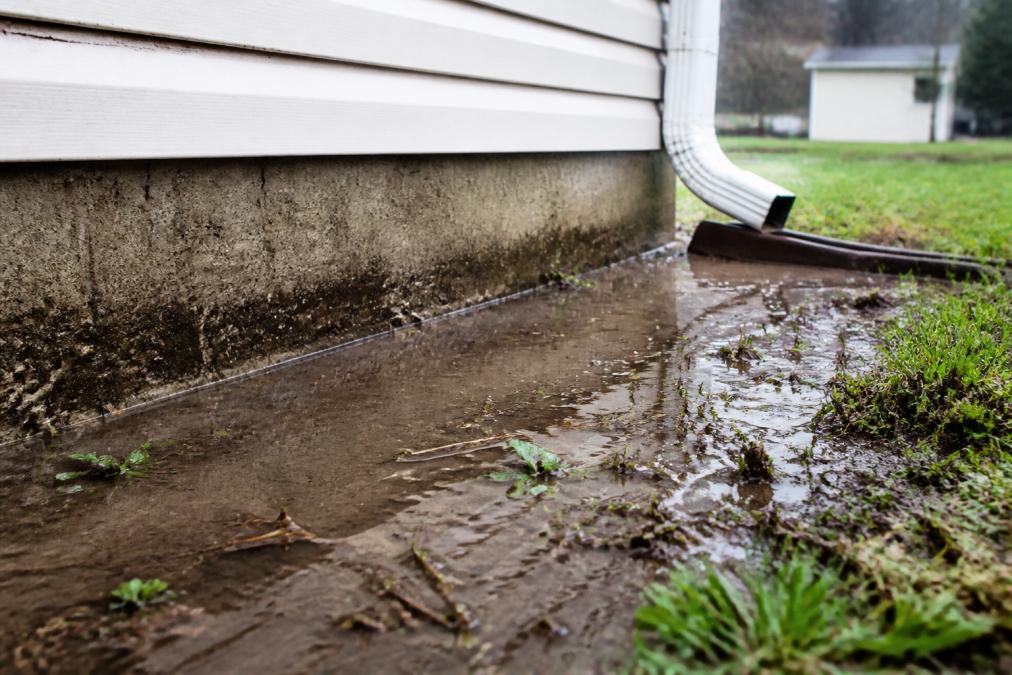
Proper grading should slope away from your foundation at a minimum grade of 5 percent (roughly half an inch of drop per foot of distance) for at least 6 feet out from the foundation wall (fema.gov). Most homes don’t meet this standard, which is why water pools easily.
How to Fix Water Pooling Near Foundation
Fixing water pooling requires addressing both the immediate drainage problem and the underlying gutter system. Start by inspecting gutters for debris, damage, and proper pitch. Gutters should slope slightly toward downspouts so water flows freely.
Next, extend your downspouts. Most homes have downspouts that empty directly at the foundation line. Downspouts should extend at least 4-6 feet away from the foundation, ideally into a perimeter drainage system or sloping away from the home (the CDC).
For immediate pooling problems, install French drains to redirect surface water away from the foundation. A French drain consists of a trench filled with gravel and a perforated pipe that directs water away to a safe discharge point.
Regrade the soil around your foundation if possible to create positive slope away from the foundation. If regrading isn’t feasible, install a perimeter drain system that collects water at the foundation line and directs it away.
Gutter Downspout Extension Requirements
Downspout extensions are one of the most cost-effective preventative measures for foundation gutter damage, yet they’re frequently overlooked. A downspout that discharges water right at the foundation line actively harms your home.
Minimum downspout extension is 4 feet from the foundation wall. This gives water enough distance to spread out and soak into a wider area of soil rather than concentrating directly against the foundation. In areas with heavy rainfall or clay soil, 6-8 feet is better.
The extension should be slightly sloped away from the home so water doesn’t pool at the end. Rigid or flexible extensions work equally well; the key is consistent slope and adequate distance. In winter, ensure extensions don’t direct water back toward the foundation when they freeze.
For homes with existing drainage problems, pair downspout extensions with splash blocks or underground perimeter drains. A splash block redirects water outward as it exits the downspout. Underground systems are more permanent and handle larger water volumes more effectively.
Signs of Soil Erosion Around Foundation
Soil erosion around your foundation indicates that water is moving too quickly and forcefully across the surface, carrying soil particles away and weakening the soil structure that supports your foundation.
Look for bare patches where grass has been washed away, small gullies carved into the ground, exposed tree roots, settling of the soil surface, and visible soil displacement. These indicate water drainage is too aggressive or concentrated in one area.
Erosion accelerates other foundation problems. As soil erodes, it creates voids beneath the foundation. The foundation can settle into these voids, causing uneven settling and cracking.
Prevent erosion by controlling water velocity. Downspout extensions, splash blocks, and gradual grading slopes all reduce the force of water hitting the ground. Landscape fabric or erosion control matting can stabilize vulnerable areas. Planting ground cover or installing mulch also helps absorb water and prevent soil displacement.
When to Call a Professional Foundation Inspector
Call a professional if you see horizontal cracks in foundation walls, multiple cracks in different areas, or cracks that are actively widening. These indicate active foundation movement that needs diagnosis.
Significant water infiltration into your basement or crawl space, especially if it appears suddenly or worsens during rain, warrants professional assessment. If you notice multiple signs appearing together, sticking doors, sloping floors, and visible cracks, don’t wait.
Professional inspectors use moisture meters, crack gauges, and laser levels to measure foundation movement precisely. They can distinguish between cosmetic and structural cracks, determine the cause of damage, and recommend specific repairs. Many also identify drainage problems contributing to foundation issues, which is critical for long-term prevention.
EFER Renovations Inc. works with homeowners who’ve discovered foundation problems and need to understand both the immediate repairs required and the underlying gutter and drainage issues that caused the damage.
Preventative Maintenance for Your Gutters
The best foundation gutter damage is damage that never happens. Preventative maintenance is far cheaper than repairing a damaged foundation. Inspect gutters twice yearly (spring and fall), after major storms, and before winter.
During inspections, check for debris accumulation, which blocks water flow and causes overflow. Remove leaves, twigs, and sediment by hand. Look for sagging sections where gutters have pulled away from the fascia board. Check for rust, holes, or separation at seams.
Verify that gutter pitch is adequate. Gutters should slope toward downspouts at a minimum of 0.5 inches per 10 feet of gutter run (nachi.org). If pitch is inadequate, gutters will hold standing water, accelerating algae growth and corrosion.
Ensure downspouts are securely attached and free of debris. Check that they discharge water at least 4-6 feet from the foundation. In fall, clear downspouts of leaves and sediment. In winter, ensure they don’t ice over.
Consider gutter guards if debris accumulation is persistent. Quality gutter guards reduce cleaning frequency while allowing water through. Pair them with annual professional inspection to catch problems early.
Monitor your foundation and basement for signs of water infiltration or new cracks. If you notice changes, investigate whether gutter or drainage issues have developed. Catching problems early prevents expensive foundation repairs.
Protecting your foundation starts with gutters that work. Water that should be directed safely away is instead pooling against your foundation, creating conditions for settling, cracking, and structural damage. If you’ve noticed signs of foundation gutter damage, cracks, sticking doors, water pooling, or sloping floors, the solution begins with your gutter system and drainage. EFER Renovations Inc. specializes in gutter installation, downspout extensions, and drainage solutions that prevent foundation damage before it starts. Our 13-year track record includes helping homeowners across New Jersey and Eastern Pennsylvania address both active foundation problems and the gutter systems that caused them. Contact us today for a no-obligation assessment of your gutters and foundation drainage.
Frequently Asked Questions
Can bad gutters really cause foundation problems?
Yes. When gutters overflow or downspouts discharge water too close to the foundation, water infiltrates the soil around your home’s base. This increases hydrostatic pressure against foundation walls, leading to cracks, settlement, and structural damage over time. Proper gutter maintenance and downspout extensions that direct water at least 4-6 feet away are critical preventative measures.
What are the first signs of foundation gutter damage?
Early warning signs include hairline cracks in foundation walls, water staining on basement walls, musty odors, and water pooling near the foundation perimeter. You may also notice soil erosion around the foundation or dampness in crawl spaces. If you spot these issues, have a structural inspection performed promptly to assess the extent of damage.
How do I know if my gutters are causing water to pool near my foundation?
Inspect your gutters after heavy rain. Check for overflow, sagging sections, or debris blockages that prevent proper drainage. Look at the ground around your foundation’s perimeter, if water pools there while gutters overflow, your system isn’t directing water away effectively. Also examine the soil grading; it should slope away from the foundation to promote proper water runoff.
Will insurance pay for foundation repair caused by gutter failure?
Most homeowners insurance policies do not cover foundation damage from poor maintenance or gutter failure, as these are considered preventable through proper upkeep. However, damage from sudden, catastrophic events (like severe storms causing gutter collapse) may be covered. Review your policy details and contact your insurer directly. EFER Renovations Inc. offers insurance claims assistance for storm-related damage.
This article was written using GrandRanker