
Table of Contents
- Why Commercial Exterior Maintenance Protects Property Value
- Your Commercial Building Exterior Maintenance Checklist
- Seasonal Maintenance Schedules That Prevent Costly Repairs
- Budgeting for Commercial Exterior Maintenance Without Surprises
- Hiring Commercial Exterior Contractors: Vetting and Vendor Management
- Regulatory Compliance, ADA, and Green Maintenance Practices
- Conclusion
- Frequently Asked Questions
Last Updated: September 12, 2026
Why Commercial Exterior Maintenance Protects Property Value
Commercial exterior maintenance is the scheduled inspection, cleaning, and repair of a building’s outside surfaces, roof, facade, pavement, landscaping, and the most reliable lever for protecting asset value.
Deferred upkeep rarely stays cheap: a small roof leak spreads into insulation and ceilings, cracked asphalt becomes a liability claim, and faded paint signals neglect.
At EFER Renovations Inc., 13 years of experience shows one pattern: buildings that hold value have a documented maintenance rhythm, not a reactive one.
Curb Appeal and Occupant Perception
Occupant perception starts at the curb: before reading a lease, a tenant has already judged the property by its exterior.
Stained siding, overflowing gutters, and cracked walkways say nobody is paying attention, affecting leasing velocity, renewals, and rent pushback.
A clean facade, intact glass, and swept parking areas signal that ownership invests in the asset, which tenants read as stability.
Curb appeal is a leasing and retention tool, not a cosmetic one, and costs far less than the vacancy it prevents.
Liability Reduction and Asset Longevity
Liability reduction is the less visible payoff. Trip hazards, loose roof flashing, and failing handrails generate claims.
Routine inspections catch those defects while they are cheap to fix: a resealed flashing detail costs a fraction of an interior water-damage repair.
Asset longevity works the same way: every exterior component has a service life, and roofs, siding, and pavement degrade faster when water sits or debris traps moisture.
Preventative maintenance extends service life, spreading capital expenditure over more years.
The cheapest exterior repair is the one you schedule before it becomes an emergency. Deferred maintenance does not save money; it moves the cost to a larger invoice later.
Your Commercial Building Exterior Maintenance Checklist
A commercial building exterior maintenance checklist is a written, recurring list of inspection and service tasks organized by component and season, turning intentions into an executable schedule.
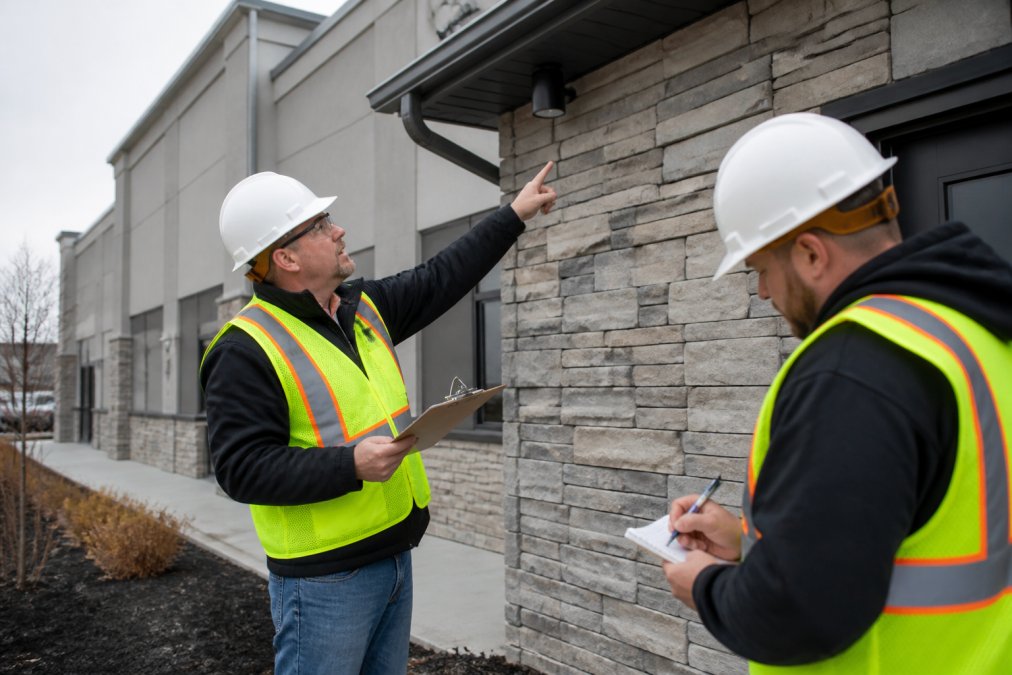
The checklist below covers the core exterior systems. Walk the property at least quarterly, and after any major storm.
Roof, Gutter, and Facade Inspections
Roof inspection and gutter service protect the building from the top down. Water is the most common cause of exterior deterioration, and both systems exist to move it away.
- Inspect roof membranes, flashing, and penetrations for cracks or lifting
- Clear gutters and downspouts of debris, especially after fall
- Check facade for paint failure, cracking, or spalling
- Inspect sealants and caulking around windows and joints
- Confirm drainage paths flow away from the foundation
Facade maintenance is easy to postpone because early failures are subtle: paint failure and hairline cracks look minor until water reaches the substrate, then repair scope grows fast.
Pavement, Landscaping, and Walkway Care
Parking lot sweeping and asphalt repair keep the site safe and presentable. Pavement takes constant abuse from weather, vehicles, and salt, so it needs a standing schedule.
- Sweep parking areas and walkways on a set frequency
- Seal cracks before they widen into potholes
- Restripe parking and ADA markings as they fade
- Trim landscaping so it does not touch or trap moisture against the building
- Inspect lighting, bollards, and signage for damage
Walkway sanitation matters for safety and perception: stained, uneven walkways are a trip hazard and the first thing visitors notice.
Photograph every inspection, even the clean ones. A dated photo log shows a documented maintenance history, which helps with insurance claims, vendor disputes, and proving you acted reasonably if a liability question ever arises.
Seasonal Maintenance Schedules That Prevent Costly Repairs
Seasonal maintenance schedules are the backbone of any exterior program: different systems fail at different times of year, so work rotates with the calendar.
Most guides stop at a four-row season table, but that is a starting point, not a program. A failure-preventing schedule has three layers: a fixed seasonal rotation, condition-based triggers that override the calendar, and a documented record.
The Fixed Seasonal Rotation
| Season | Primary Focus | Key Tasks |
|---|---|---|
| Spring | Recovery and inspection | Roof inspection, facade review, pavement crack sealing, gutter clearing, irrigation startup |
| Summer | Surface care | Pressure washing, window cleaning, painting touch-ups, landscaping, parking lot sweeping frequency increase |
| Fall | Storm prep | Gutter service, drainage checks, sealant renewal, leaf removal, irrigation blowout |
| Winter | Damage control | Ice and snow monitoring, leak checks, interior moisture watch, salt and de-icer management |
The logic is simple: inspect after winter to catch freeze-thaw damage, prepare before winter to reduce it. Skipping either end produces expensive surprises.
Condition-Based Triggers That Override the Calendar
The fixed rotation is the floor, not the ceiling. Certain events should trigger inspection regardless of month:
- Wind events. After sustained high winds or any gust strong enough to move site furniture, inspect roof edges, flashing, and any loose facade elements. Wind damage rarely announces itself from the ground.
- Hail. Hail bruises asphalt shingles and membrane roofing in ways that are invisible until water finds them. Document the date and inspect within days, not weeks, because insurance claim windows are time-sensitive.
- Freeze-thaw cycles. Repeated freezing and thawing opens pavement cracks and sealant joints. Inspect after the first hard thaw of the season.
- Heavy rain or flooding. Check drainage paths, downspouts, and any low-lying pavement for ponding. Standing water is the leading cause of premature pavement failure.
- Tenant or occupant reports. A single complaint about a ceiling stain or a wet walkway is a data point. Treat it as a trigger, not an inconvenience.
Why the Calendar Alone Fails
A calendar-only schedule assumes weather behaves predictably, and it does not. A cold-winter property faces a different failure profile than a mild-climate one, and one severe storm can compress a year of wear into a week.
The calendar tells you when to look. The triggers tell you when to look again. Both are necessary.
Documenting the Cycle
Every seasonal pass should produce a dated record of what was inspected, found, scheduled, and deferred. That record turns a schedule into evidence for insurance claims, liability defense, and capital forecasting.
Property upkeep is cumulative. A schedule that runs every year costs less than one that runs only when something breaks.
Build the trigger list into your vendor agreements, not just your internal calendar. When your contractor knows that a hail event requires a documented inspection within a set number of days, you stop relying on someone remembering to call.
Budgeting for Commercial Exterior Maintenance Without Surprises
Budgeting for commercial exterior maintenance means separating routine upkeep from capital expenditure. Routine maintenance is predictable and recurring; capital projects are larger and less frequent.
Most property managers fund only the routine side, then a roof reaches end of life and the replacement lands as an unbudgeted shock.
Routine vs. Capital: Two Different Budgets
Routine maintenance covers cleaning, sweeping, inspections, small repairs, and seasonal service. It is recurring, relatively stable year over year, and should be funded from operating income.
Capital expenditure covers component replacement: roof systems, pavement overlays or replacement, facade restoration, window replacement, and major drainage work. It is lumpy, expensive, and should be funded from a reserve, not from the same line as routine work.
Mixing the two is the most common budgeting error. When capital work gets paid out of the operating line, it either crowds out routine maintenance or triggers a special assessment. Both outcomes damage the asset.
How Reserve Funding Actually Works
A reserve fund is not a savings account you top up when you remember. It is a forecast built from component condition and expected service life.
The mechanism is straightforward:
- Inventory the components. Roof, pavement, facade, windows, drainage, lighting, landscaping hardscape. Each is a separate line.
- Assign an expected service life. Manufacturer guidance and inspection history both inform this. A commercial roof system has a published expected life; so does an asphalt parking lot before it needs an overlay.
- Estimate replacement cost. Use current market pricing, not pricing from the year the component was installed.
- Divide by the remaining years. That annual figure is your reserve contribution for that component.
- Sum the components. The total is your annual reserve target.
This is the same logic reserve study practitioners use. The output is a number you can defend in a budget meeting, because it is tied to condition and expected life rather than to a guess.
Funding Benchmarks and Trade-Offs
There is no universal percentage that fits every property. A newer building with a recently replaced roof carries a lighter reserve burden than a twenty-year-old property with original systems. What matters is that the reserve is funded against the actual condition inventory, not against a flat rule of thumb.
The trade-off is real. Underfunding the reserve keeps current-year expenses low but guarantees a larger future hit. Overfunding ties up capital that could be deployed elsewhere. The right level is the one that matches your component schedule.
Prioritizing Repairs by Risk, Not Visibility
When the budget is tight, prioritization matters more than the total number. Rank work by risk:
- Water intrusion. Any defect that lets water into the structure outranks cosmetic work. Water damage compounds.
- Safety and liability. Trip hazards, failing handrails, and damaged lighting are claim generators. Address them first.
- Compliance. Faded ADA striping, blocked accessible routes, and drainage violations carry regulatory exposure.
- Deferred cosmetic work. Paint, landscaping, and appearance items matter for leasing, but they can wait behind the three categories above.
A hidden leak outranks a cosmetic stain every time.
Reviewing the Reserve Annually
The reserve is a living forecast. Review it every year against actual condition, not against the original plan. If a roof is aging faster than expected, the reserve contribution needs to rise. If a component was replaced early, the schedule shifts.
The review is also where you catch the most expensive pattern: treating a recurring repair as a one-time cost. If the same fix keeps coming back, the underlying problem has not been solved, and you are paying twice for the same failure.
The most common budgeting mistake is treating a repair as a one-time cost and then repeating it every year. If the same fix keeps coming back, the underlying problem has not been solved, and you are paying twice for the same failure.
Budget allocation should follow condition data. When you inspect consistently, you can forecast which component will need replacement next and build the reserve around it.
Hiring Commercial Exterior Contractors: Vetting and Vendor Management
Hiring commercial exterior contractors comes down to verification, not sales pitches. Anyone can promise a fast turnaround; the question is whether they can prove they will deliver.
Vendor management starts before you sign anything. Ask for licensing, insurance certificates, and references from comparable commercial properties. Then check them.
- Confirm the contractor is licensed and carries general liability and workers’ compensation coverage
- Request proof of manufacturer certifications for roofing and exterior products
- Ask for references on multi-unit and commercial properties specifically
- Get written scopes that name materials, timelines, and payment terms
- Confirm who handles permits and inspections
The paperwork matters because it shifts risk. An uninsured contractor working on your roof creates exposure that lands on the property owner.
Service schedule reliability is the other half of vetting. A contractor who finishes on time and communicates clearly is worth more than one who underbids and disappears.
EFER Renovations Inc. backs its work with a 10-year workmanship warranty and holds GAF, Owens Corning, and IKO certifications, with a 5.0 average rating across 73 Google reviews. For commercial properties that need maintenance and repairs rather than full replacement, we handle both.
Ask every prospective contractor how they handle change orders in writing. The vendors who answer that question clearly are usually the ones who also show up when they say they will.
Regulatory Compliance, ADA, and Green Maintenance Practices
Regulatory compliance is the part of exterior maintenance that competitors skip, and it is where property managers carry the most avoidable risk. Exterior work touches accessibility, stormwater, and safety rules that vary by jurisdiction.
ADA compliance is the clearest example. Accessible parking spaces, curb ramps, and accessible routes must be maintained, not just installed. Faded striping or a blocked ramp can create a compliance problem even when the original construction was correct. The ADA Standards for Accessible Design set the requirements property managers should verify against.
Stormwater and environmental rules matter too. Runoff from parking lots and pressure washing can be regulated, so confirm local requirements before discharging wash water. The EPA stormwater program guidance outlines how these obligations apply to commercial sites.
Green maintenance practices reduce both cost and risk. They include:
- Native, low-water landscaping that needs less irrigation and trimming
- Scheduled pressure washing instead of harsh chemical cleaning
- Reflective or cool roofing that lowers cooling load
- Recycling removed materials such as asphalt and metal
Technology is changing how this work is tracked. Digital inspection tools and photo documentation now let property managers build a maintenance record that supports compliance, insurance, and capital planning at the same time. The GAF roofing resources and similar manufacturer guidance can help confirm material and warranty requirements before scheduling work.
Sustainability and compliance are not separate programs. Both depend on the same thing: knowing the actual condition of the building and documenting what you did about it.
Conclusion
Exterior maintenance is unforgiving of delay. The problems that stay cheap are the ones you catch on a scheduled walkthrough, and the ones that get expensive are the ones you find during a storm.
EFER Renovations Inc. helps commercial property managers stay ahead of that curve with roof inspection, gutter service, facade work, and pavement care, backed by a 10-year workmanship warranty, 24/7 emergency support, and insurance claims assistance. EFER Renovations Inc. also offers a 10% discount for seniors and veterans, and quick, no-obligation estimates.
Get started with EFER Renovations Inc. and protect the asset you already own.
Frequently Asked Questions
What are the core responsibilities of a commercial property manager regarding exterior maintenance?
Commercial property managers oversee routine maintenance, walkthrough inspections, and service schedules for roofs, facades, parking lots, landscaping, and windows. They also manage vendor relationships, allocate budget for preventative maintenance and capital expenditure, and ensure compliance with local codes and ADA requirements. The goal is to protect structural integrity, reduce liability, and maintain curb appeal that keeps occupants and tenants satisfied.
How often should commercial exterior inspections be conducted?
Most commercial properties need a walkthrough inspection at least twice a year, ideally in spring and fall. Roof inspections should happen after any major storm, and parking lots need checking for asphalt repair and sweeping every quarter. High-traffic areas like walkways and entrances may need monthly attention. A documented maintenance checklist keeps these inspections consistent and helps catch small issues before they become expensive repairs.
How does exterior maintenance impact commercial property value?
Well-maintained exteriors directly affect occupant perception, tenant retention, and resale value. Preventative maintenance on roofs, facades, and pavement extends asset longevity and reduces liability from hazards like cracked walkways or clogged gutters. Properties with a documented service schedule for pressure washing, window cleaning, and landscaping typically command higher rents and face fewer emergency repair costs, which improves net operating income over time.
How can property managers prioritize exterior repairs during budget constraints?
Start with items that affect safety and structural integrity, such as roof leaks, asphalt repair, and walkway sanitation. Then address curb appeal items like facade maintenance and landscaping services. Use a walkthrough inspection to rank issues by urgency and cost. For budgeting, set aside a percentage of net operating income for routine maintenance and a separate reserve for capital expenditure so unexpected repairs do not derail your annual plan.
What should I look for when hiring commercial exterior contractors?
Verify licensing, insurance, and manufacturer certifications before signing anything. Ask for a written scope of work, a timeline, and proof of past commercial projects. Check whether they offer a workmanship warranty and how they handle emergency calls. A reliable contractor will provide a detailed estimate, communicate clearly about scheduling, and have references from similar multi-unit property or commercial real estate clients.