
Table of Contents
- Why Gutter Maintenance Matters
- Signs of Gutter Water Damage You Should Not Ignore
- Establish a Gutter Cleaning Frequency That Works for Your Home
- Step 1: Clean Gutters and Downspouts Properly
- Step 2: Install the Best Gutter Guards for Debris Protection
- Step 3: Check and Adjust Gutter Slope for Proper Water Runoff
- Step 4: Extend Downspouts and Add Splash Blocks
- Step 5: Inspect and Maintain Underground Drainage Systems
- Frequently Asked Questions
Last Updated: September 4, 2026
Clogged gutters are one of the leading causes of preventable structural damage, directing thousands of gallons of water against your foundation, siding, and roof line every season. Learning how to prevent clogged gutter damage is simpler than most homeowners think, and it does not require expensive replacements or weekly maintenance. At EFER Renovations Inc., we have spent over 13 years inspecting and repairing exterior systems, and we have found that a consistent, practical routine stops nearly all serious issues before they start. Below, we outline the seven steps that matter most, from cleaning frequency to downspout extensions, so you can protect your home’s structural integrity without guesswork. Gutter maintenance is the process of keeping channels clear of debris to ensure proper water runoff, and it is the most cost-effective home maintenance task you can perform.
Why Gutter Maintenance Matters
The primary job of your gutter system is to collect roof runoff and move it away from your home’s foundation. When debris accumulation blocks that path, water overflow occurs, saturating the soil next to your foundation and seeping into basements or crawl spaces. Over time, this moisture damage compromises structural integrity and creates ideal conditions for mold prevention failures.
Most homeowners do not realize that a clogged system also adds significant weight to the fascia board. A section filled with wet leaves and granules can pull the gutters away from the roofline, bending gutter hangers and causing permanent sagging. This is why regular upkeep is a core part of home maintenance, not an optional chore.
Ignoring clogged gutters for a single heavy rainfall season can lead to fascia board rot and foundation cracks. The repair cost for either issue far exceeds the time investment of a seasonal cleaning.
Signs of Gutter Water Damage You Should Not Ignore
Signs of gutter water damage often appear first on the exterior of your home before they become serious structural problems. Water overflow stains running down the siding, peeling paint near the roofline, and rust spots on the gutters themselves are early warnings. Inside the home, look for water marks on ceilings or walls near exterior corners, which indicate that moisture is breaching the roofline.
Another common indicator is soil erosion around the foundation or splashback staining on basement walls. If you notice water pooling near the base of the house after a storm, your drainage system is failing to divert water runoff correctly. Catching these signs early prevents the need for extensive repairs, and it is where most homeowners save the most money.
Establish a Gutter Cleaning Frequency That Works for Your Home
The ideal gutter cleaning frequency depends on two primary factors: your surrounding tree canopy and your regional climate. Homes bordered by mature deciduous trees typically need cleaning twice per year: once in late spring after seed drop and once in late fall after leaf fall. Homes in open areas with no overhanging branches may only need an annual inspection and cleaning.
| Tree Exposure | Recommended Frequency | Primary Season |
|---|---|---|
| Heavy canopy (oaks, maples) | 3-4 times per year | Late spring, mid-summer, late fall |
| Moderate trees nearby | 2 times per year | Late spring, late fall |
| Minimal or no trees | 1 time per year | Late fall |
However, your regional climate significantly modifies this baseline. In heavy snow regions (Northeast, Upper Midwest, Mountain West), add a pre-winter inspection in October to clear debris before ice dam season begins. Ice dams form when warm air melts snow on the roof, and that meltwater refreezes in clogged gutters, creating a dam that forces water under shingles (energy.gov). A clean gutter prevents this mechanism entirely. In these regions, also inspect gutters after any thaw cycle, as debris can shift and create new blockages.
In high-rainfall regions (Pacific Northwest, Southeast), increase frequency by one additional cleaning per year during the wettest season. Gutters clogged during heavy downpours overflow immediately, and the saturation cycle accelerates foundation damage. In arid regions (Southwest, High Plains), cleaning frequency can be lower, but inspect after dust storms or monsoon seasons when fine sediment accumulates rapidly.
Beyond the schedule, inspect your gutters after any major storm. High winds can deposit debris into clean channels quickly, and a fast check takes less than ten minutes. This seasonal maintenance habit, adjusted for your climate zone, is the single best way to prevent clogged gutter damage from developing unnoticed.
Step 1: Clean Gutters and Downspouts Properly
Start your cleaning routine by removing large debris by hand or with a gutter scoop, working from the end opposite the downspout. Place collected debris into a bucket rather than letting it fall onto the ground, where it can wash back into the system. Once the channel is clear, flush the gutters with a garden hose to identify slow-draining areas and to push fine sediment toward the downspout.
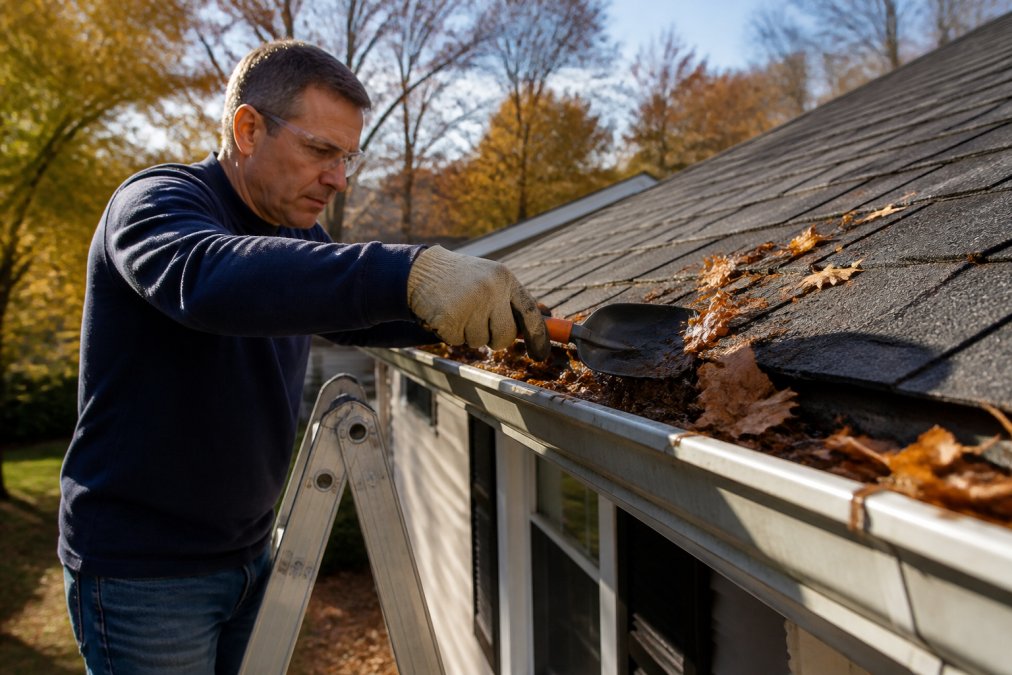
The downspout is where most clogs form. If water does not flow freely from the bottom, use a plumber’s snake or a high-pressure nozzle to break up the blockage. A common mistake is cleaning the top of the gutter while leaving a hidden clog in the vertical drop, which causes water to back up and overflow during the next rain.
Flush your downspout from the top using a hose with a threaded nozzle. If water backs up immediately, the clog is near the top. If it drains slowly, the obstruction is lower. This diagnosis saves you from snaking a clear pipe.
Step 2: Install the Best Gutter Guards for Debris Protection
Gutter guards reduce how often you need to climb a ladder, but they do not eliminate maintenance entirely, and their effectiveness depends heavily on your gutter material and local debris profile.
Aluminum gutters (the most common residential choice) are compatible with nearly all guard types: mesh screens, brush inserts, and reverse-curve systems all attach securely. Aluminum is lightweight, so guards do not add structural stress. However, aluminum gutters themselves are prone to sagging under heavy guard weight if hangers are spaced more than 24 inches apart. Before installing any guard, verify your hanger spacing and reinforce if needed.
Vinyl gutters require careful guard selection. Vinyl is less rigid than aluminum and cannot support the weight of solid guards or heavily sediment-laden mesh screens. Brush-style inserts and lightweight mesh are safer choices. Avoid reverse-curve guards on vinyl, as the mounting brackets can crack the gutter material during installation or seasonal expansion cycles. Vinyl also expands and contracts significantly with temperature, so ensure any guard allows for this movement.
Copper and steel gutters (premium or older homes) are durable enough for any guard type, but copper is expensive to repair if a guard installation damages it. Use a contractor experienced with copper systems, as improper fastening can create corrosion points. Steel gutters are rare in new construction but common in older homes; they rust easily if the guard installation creates scratches or if water pools behind the guard.
Guard types and trade-offs:
Mesh screens that sit over the gutter opening block leaves and pine needles while allowing water to pass through. They are affordable and easy to install, but fine sediment (pollen, roof granules, decomposing leaf fragments) can accumulate on top, creating a secondary clog that requires annual cleaning anyway.
Brush-style inserts sit inside the channel and trap debris on top, making cleanup a simple lift-and-dump task. They work well in moderate-debris environments but can become matted with wet leaves in heavy canopy areas, reducing water flow and requiring more frequent maintenance than unguarded gutters.
For homes with heavy tree coverage, a reverse-curve guard is often the most effective option. These systems use surface tension to direct water into the gutter while debris slides off the edge. They are more expensive (pricing depends on quantity, dates, and delivery) but reduce cleaning frequency significantly in high-debris zones. The trade-off is that they can channel water over the gutter edge if the pitch is too steep or if the guard is undersized for your roof’s runoff volume.
Regardless of the type you choose, verify that the guard is compatible with your gutter profile and material, confirm that it does not void your roof manufacturer’s warranty, and ensure the installation does not compromise your gutter’s slope. A poorly fitted guard can channel water over the gutter edge entirely, defeating the purpose of the system. If you are uncertain about compatibility, consult the guard manufacturer’s material-specific installation guide or hire a professional installer.
Step 3: Check and Adjust Gutter Slope for Proper Water Runoff
Gutter slope, also called gutter pitch, is the slight angle that allows water to flow toward the downspout. The standard recommendation is a quarter-inch drop for every ten feet of gutter (nachi.org). If your gutters are level or sag in the middle, water pools and eventually overflows, even when the channels are completely clean.
To check the slope, pour a bucket of water into the gutter at the far end and watch how it travels. If water pools or moves slowly, the gutter hangers likely need adjustment. Loosen the hangers nearest the low spot and raise the gutter slightly, re-securing them to maintain the correct pitch. This is a two-person job that takes about an hour for a typical home, and it is one of the most overlooked fixes in the entire drainage system.
Step 4: Extend Downspouts and Add Splash Blocks
A downspout that empties directly against the foundation undoes all the work of your gutter system. Water discharged at the base of the wall saturates the soil and seeps into the foundation over time. Downspout extensions are the simplest fix: rigid or flexible sections that carry water at least four to six feet away from the house (fema.gov).
Splash blocks are a complementary solution that disperses water velocity at the discharge point, preventing soil erosion. For a more permanent approach, bury a perforated drainpipe that connects to the downspout and outlets at the property line or into a dry well. This water diversion strategy protects the foundation while keeping the discharge point out of sight.
Step 5: Inspect and Maintain Underground Drainage Systems
Underground drainpipes move water from the downspout to a safe discharge point, but they require periodic attention. Over time, roots can infiltrate joints, and sediment can accumulate at low points, creating a slow clog that surfaces as a wet spot in your yard. Inspect the outlet of the pipe during a heavy rain to confirm water is flowing freely.
If you suspect a blockage, flush the line from the downspout opening using a hose. For persistent clogs, a professional plumber can camera-inspect the line to identify root intrusion or pipe collapse. This step is critical for homes with buried drainage, as a failure here sends water back up the downspout and directly into the gutter system.
Protecting your home from water damage starts with a working gutter system, but recognizing when a repair is beyond your skill level matters just as much. EFER Renovations Inc. provides professional gutter installation, repair, and maintenance across New Jersey and Eastern Pennsylvania, backed by GAF, Owens Corning, and IKO certified contractors. Our team handles insurance claims assistance and offers 24/7 emergency support, plus a 10-year workmanship warranty on installations. Contact us today for a quick, no-obligation estimate and keep your home’s drainage system working for decades.
Frequently Asked Questions
How often should gutters be cleaned to prevent damage?
Most homes benefit from gutter cleaning twice per year: once in late spring after trees leaf out, and again in fall after leaves drop. Homes surrounded by heavy tree coverage may need quarterly cleaning. If you live in an area with frequent storms or have a metal roof that sheds debris, increase frequency to every 4-6 weeks during peak seasons. Regular cleaning prevents debris accumulation that leads to water overflow and foundation damage.
What are the signs of gutter water damage I should watch for?
Watch for water stains on fascia boards and soffits, peeling paint or rust spots on gutters, water pooling around your foundation, cracks in basement walls, mold growth near gutters, and sagging gutter sections. Inside your home, signs include water damage on ceilings or walls near the roofline, musty odors in attics, and visible moisture in crawl spaces. These indicate that water is not being diverted properly, allowing it to overflow and damage structural integrity.
Do gutter guards really prevent clogs?
Gutter guards significantly reduce debris accumulation and can prevent many clogs, but no system is 100% effective. Mesh guards work well for leaves and larger debris but may allow fine particles like shingle granules to pass through. Foam inserts can trap smaller debris over time. The best gutter guards for debris depend on your local vegetation and roof type. Even with guards, inspect gutters at least twice yearly since some debris will still accumulate, especially during heavy storms or in areas with dense tree coverage.
What happens if I leave gutters clogged for a long time?
Clogged gutters cause water to overflow and pool around your foundation, leading to serious structural damage including foundation cracks, basement flooding, and mold growth. Prolonged water exposure damages fascia boards, soffit, and roof structure. Corrosion and rust develop on gutters and hangers. Water can seep into walls, causing interior damage and creating conditions for pest infestation. The longer clogs remain, the more expensive repairs become. Addressing clogs promptly prevents these costly problems and protects your home’s structural integrity and property value.
This article was written using GrandRanker