
Table of Contents
- Why a New Roof Still Pays Off in 2026
- Does a New Roof Increase Home Value?
- Energy Efficiency, Ventilation, and Lower Utility Bills
- Protection From Leaks, Storm Damage, and Structural Problems
- How Long Does a New Roof Last? Lifespan by Material
- Signs You Need a Roof Replacement (and When Repair Is Enough)
- Average Cost of Roof Replacement 2026: What Drives the Price
- Insurance, Taxes, and What Homeowners Ask Before Scheduling
- Frequently Asked Questions
Last Updated: October 12, 2026
Why a New Roof Still Pays Off in 2026
A new roof installation is one of the few home improvements that pays you back in multiple ways at once: it protects the structure, cuts energy waste, and makes the house easier to sell. At EFER Renovations Inc., we’ve spent 13 years replacing roofs across New Jersey and Eastern Pennsylvania, and the pattern is consistent.
The federal Energy Star program guidance on reflective roofing notes that a properly installed cool roof can lower surface temperatures and reduce cooling demand. That matters more every year as summer heat intensifies.
Below, we break down what a new roof installation actually delivers in 2026, what it costs, and how to tell whether you need a full replacement or just a repair.
Does a New Roof Increase Home Value?
Yes, a new roof typically increases home value because buyers treat roof age as a proxy for overall maintenance. A roof with years of life left removes a major objection during negotiations.
Real estate professionals often describe roofing as one of the highest-return exterior projects a homeowner can complete. The exact return varies by market, material, and how the roof fits the rest of the house.
Curb Appeal, Appraisals, and Buyer Confidence
Curb appeal starts at the roofline. New shingles in a clean color instantly modernize a home’s exterior appearance, and appraisers factor roof condition into their valuations.
Buyer confidence is harder to measure but easy to feel. A roof inspection report that lists “10+ years remaining” ends the conversation. One that says “replace within 2 years” hands the buyer use.
If you’re selling within three years, a new roof is less about ROI and more about removing the single biggest reason buyers walk away.
Energy Efficiency, Ventilation, and Lower Utility Bills
Energy efficiency gains from a new roof come mostly from two things: better solar heat reflection and correct attic ventilation. Both reduce how hard your HVAC system works.
Modern asphalt shingles with reflective granules and metal roofing with cool coatings push solar heat away instead of absorbing it. That keeps attic temperatures down, which keeps your living space cooler.
How Installation Quality and Attic Ventilation Decide Your Savings
Installation quality is where savings live or die. A roof installed without proper intake and exhaust ventilation traps heat and moisture, which cancels out any benefit from reflective shingles.
What most guides miss is that insulation and ventilation work as a pair. Adding attic insulation without fixing ventilation can actually worsen moisture problems. Ask your roofing contractor how they’ll balance intake vents, ridge vents, and insulation depth before work begins.
Protection From Leaks, Storm Damage, and Structural Problems
Leak prevention is the core job of any roof, and it depends on layers most homeowners never see. Underlayment, ice-and-water shield, and flashing do the heavy lifting.
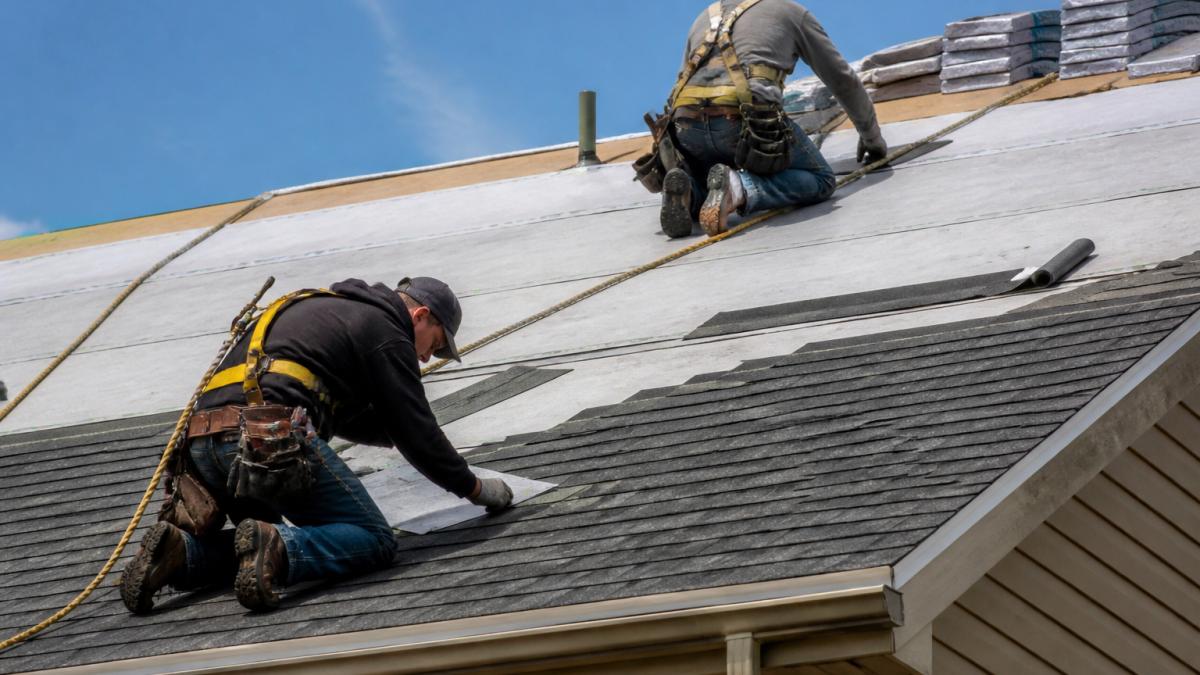
Flashing seals the joints around chimneys, skylights, and valleys. When flashing fails, water finds the path of least resistance and shows up as a ceiling stain weeks later.
Water damage rarely stays cosmetic. It rots decking, weakens structural integrity, and creates conditions for mold. Storm damage accelerates all of it. After a major hail or wind event, small breaches become full leaks fast.
Skipping a post-storm roof inspection is the most expensive shortcut homeowners take. Damage that looks minor from the ground often means compromised flashing or lifted shingles that leak on the next heavy rain.
How Long Does a New Roof Last? Lifespan by Material
A new roof lasts between 15 and 50+ years depending on material, installation quality, and climate exposure. Material choice is the biggest single factor, but lifespan alone is a poor way to pick a roof. Two materials with the same expected life can differ sharply in upfront cost, maintenance burden, energy performance, and how well they handle the weather patterns in your region.
The table below compares the four most common residential options across the factors that actually drive long-term value.
| Material | Typical Lifespan | Relative Upfront Cost | Energy Performance | Maintenance Profile | Weather Suitability |
|---|---|---|---|---|---|
| Asphalt shingles (3-tab) | 15-20 years | Lowest | Baseline; limited reflectivity | Occasional granule loss, easy spot repair | Moderate; prone to wind lift on exposed slopes |
| Architectural asphalt shingles | 25-30 years | Low to moderate | Better than 3-tab when rated for solar reflectance | Low; annual inspection is usually enough | Good; heavier weight improves wind resistance |
| Metal roofing | 40-70 years | High | Strong when finished with a cool coating; reflects solar heat | Very low; fasteners and sealant need periodic checks | Excellent; sheds snow and resists wind uplift |
| Tile or slate | 50+ years | Highest | Varies; tile mass slows heat transfer, slate performs differently | Low to moderate; cracked units need replacement | Excellent in hail and fire zones; heavy load requires framing check |
What the Table Doesn’t Tell You
Lifespan assumes correct installation. A 30-year shingle installed over a wet deck, without proper underlayment or flashing, will not reach 30 years.
Energy performance depends on more than the surface. Reflective granules and cool metal coatings reduce solar heat gain, but attic insulation and ventilation decide how much of that benefit reaches your living space.
Climate shifts the ranking. In hail-prone areas, impact-rated materials earn their premium. In heavy snow regions, metal’s shedding behavior is an advantage. In hot, sunny climates, reflectivity matters more than mass.
Matching Material to Your Situation
- Staying in the home fewer than 10 years: architectural asphalt usually balances cost and buyer appeal best.
- Planning to stay 20+ years: metal’s lifespan and low maintenance often justify the higher upfront price.
- High-end or historic home: tile or slate preserves architectural character and supports resale, provided the framing can carry the load.
- Tight budget, sound deck: 3-tab shingles remain a legitimate short-horizon choice, but expect a shorter replacement cycle.
Ask your contractor for the manufacturer’s written warranty terms, not just the advertised lifespan. Many warranties prorate coverage and exclude labor, so the practical protection is often shorter than the headline number.
Roof lifespan also depends on roof maintenance. Annual inspections, clearing debris from valleys, and replacing damaged flashing extend the life of any material, and they cost far less than an early replacement.
Signs You Need a Roof Replacement (and When Repair Is Enough)
Signs you need a roof replacement include curling or missing shingles, granules in gutters, daylight through the attic deck, and leaks that return after repair. But symptoms alone don’t settle the question. The real decision comes down to four variables: roof age, extent of damage, leak frequency, and what an inspection actually finds.
The Four Variables That Decide It
1. Roof age relative to expected lifespan. A 12-year-old architectural shingle roof is in the first half of its service life; a 22-year-old one is in the final stretch.
2. Extent and pattern of damage. Isolated damage, a single storm-torn section, one failed flashing joint, a handful of cracked shingles, is repair territory.
3. Leak frequency. One leak that a repair resolves cleanly is a repair. Leaks that return season after season, or that appear in different rooms, signal that the roof’s waterproofing layers are failing broadly.
4. Inspection findings. A professional inspection looks at what you can’t see from the ground: underlayment condition, flashing integrity, decking soundness, and attic ventilation.
A Practical Decision Framework
| Situation | Recommended Path |
|---|---|
| Under 15 years old, isolated damage, first leak | Repair |
| 15-20 years old, damage confined to one area, deck sound | Repair, with a plan to replace within a few years |
| Over 20 years old, repairs becoming annual | Replace |
| Any age, more than roughly a third of the surface compromised | Replace |
| Any age, active leaks in multiple locations | Replace |
| Storm damage with insurance involvement | Get an inspection first; the scope often decides |
Why the Repair-Only Path Often Costs More
Patching a failing roof delays the inevitable and costs more over time. Each repair adds labor and materials to a structure you’ll still replace, and the money spent on repairs doesn’t reduce the replacement price. There’s also a risk cost: a repaired-but-aging roof can leak during the next storm, and interior water damage is far more expensive than the roof work itself.
When Repair Is Genuinely the Right Call
Repair is not a compromise. It’s the correct choice when damage is isolated, the roof has meaningful life left, and the underlying deck and flashing are sound. A well-executed repair on a young roof can add years of service for a fraction of replacement cost.
If your roof is over 20 years old and you’re calling for a repair every year, put that money toward replacement instead. The pattern, not any single symptom, is the signal.
Average Cost of Roof Replacement 2026: What Drives the Price
Roofing costs depend on size, material, pitch, and how much underlying damage the crew finds. Pricing varies widely by region and project scope, so we recommend getting a written estimate rather than relying on national averages.
The main cost drivers are:
- Material cost: metal and tile run significantly higher than asphalt shingles
- Labor cost: steep pitches, multiple stories, and complex rooflines increase labor hours
- Decking and structural repairs: rotten decking or damaged framing adds to the total
- Removal and disposal: tearing off old roofing and hauling it away is a real line item
- Permits and inspections: required in most municipalities
For a no-obligation estimate on your specific roof, contact EFER Renovations Inc. directly rather than guessing from a national average.
Insurance, Taxes, and What Homeowners Ask Before Scheduling
Insurance coverage often applies to storm damage, not to wear-and-tear replacement. If a covered event caused the damage, your policy may pay for part or all of the roof.
Filing a claim is where many homeowners get stuck. Documentation, adjuster meetings, and scope disputes slow the process down. EFER Renovations Inc. provides insurance claims assistance, which removes most of that burden from the homeowner.
On taxes, some roof upgrades qualify for energy efficiency credits (Energy Efficient Home Improvement Credit). Check current IRS guidance for eligibility before assuming you qualify.
The questions we hear most often:
- “How long will this take?” Most residential replacements finish in 1-3 days, weather permitting.
- “Do you offer discounts?” Yes. EFER Renovations Inc. offers a 10% discount for seniors and veterans.
- “What if it’s an emergency?” We provide 24/7 emergency support for storm damage.
- “Is the work guaranteed?” Every project is backed by a 10-year workmanship warranty.
Frequently Asked Questions
Is there a tax deduction for getting a new roof?
Usually not as a straight deduction, but there are exceptions. If you rent out the property, a new roof is generally treated as a capital improvement and depreciated over time rather than deducted in one year. If you work from home, a portion may qualify. Some energy-efficient roofing products, such as certain metal roofs with reflective coatings, may qualify for federal tax credits or local incentives. Ask a tax professional about your specific situation before assuming any deduction applies.
Does a new roof reduce your home insurance?
It can. Many insurers offer premium discounts for newer roofs because they are less likely to leak or suffer storm damage. Some carriers also consider the roof’s age and material when deciding whether to renew coverage at all. After a new roof installation, contact your insurer and ask about a roof-age discount. Savings vary by carrier and policy, so get the discount confirmed in writing before you count on it.
How much does a new roof cost in 2026?
The average cost of roof replacement in 2026 depends on roof size, pitch, material, layers to be removed, and local labor rates. Asphalt shingles typically cost the least, while metal, tile, and slate cost more. Two homes of the same size can differ by thousands of dollars based on tear-off and decking repairs. Get a written, itemized estimate for your property rather than relying on national averages.
Can a new roof lower energy bills?
It can, but the amount depends on what you install and how well the attic is ventilated. Cool-rated asphalt shingles, metal roofing, and reflective underlayments reduce solar heat gain, which can ease the load on your air conditioner in summer. Proper intake and exhaust ventilation matters just as much as the surface material. Expect meaningful savings only when the new roof is paired with adequate insulation and airflow.
Aging roofs don’t improve with time, and storm season doesn’t wait for a convenient moment. EFER Renovations Inc. has helped homeowners across New Jersey and Eastern Pennsylvania replace failing roofs with GAF, Owens Corning, and IKO certified installation, backed by a 10-year workmanship warranty and 24/7 emergency support. Get a quick, no-obligation estimate from EFER Renovations Inc. and protect your home before the next storm finds the weak spot.