
Table of Contents
- Why Composite Decking Maintenance Matters
- How to Clean Composite Decking: Step-by-Step
- Composite Deck Cleaning Products That Work
- How to Remove Stains from Composite Decking
- Pressure Washing Composite Decking: When and How
- Seasonal Maintenance and Weather Protection
- Common Mistakes to Avoid
- Recommended Cleaning Schedule
- Frequently Asked Questions
Last Updated: October 18, 2026
Why Composite Decking Maintenance Matters
Composite decking has become a popular choice for homeowners because it resists rot, won’t splinter, and requires far less upkeep than wood. But “less maintenance” doesn’t mean “no maintenance.” How to maintain composite decking boards properly determines how long your deck lasts and how good it looks year after year.
The difference comes down to understanding what composite decking actually needs.
Unlike wood, composite boards won’t rot from moisture. But they can stain. They can develop mold and mildew. They can fade if you ignore UV exposure. Dirt buildup traps moisture and accelerates damage. Spills left sitting harden into permanent marks. The good news: preventing these problems is straightforward once you know the basics.
This guide walks you through exactly how to clean and maintain composite decking boards so they stay beautiful and structurally sound. We’ll cover the step-by-step cleaning process, stain removal techniques, seasonal care, and the mistakes most homeowners make. By the end, you’ll have a maintenance schedule that works.
How to Clean Composite Decking: Step-by-Step
Cleaning composite decking boards properly removes dirt, debris, and early-stage stains before they set in. The process is simple. Use a gentle approach, harsh pressure or abrasive tools damage the surface.
Step 1: Remove Debris and Sweep
Start by clearing leaves, twigs, and loose dirt from the deck surface. Use a broom with soft bristles or a leaf blower. Pay special attention to board gaps between deck boards, where debris collects and traps moisture.
Sweep in the direction of the boards, not against them. This prevents pushing debris deeper into gaps. Remove any visible buildup from corners, under railings, and along the perimeter.
Check board gaps after sweeping. Leaves and dirt lodged between composite deck boards create pockets where moisture sits. A small stick or flat scraper helps dislodge stubborn debris without scratching the boards.
Step 2: Rinse the Deck Surface
Connect a garden hose with a fan-tip nozzle to your water source. Rinse the entire deck surface with moderate water pressure. Start at the highest point and work downward so water runs off naturally.
Use a fan-tip nozzle, not a pressure washer yet. The fan spray distributes water evenly without concentrating force on one spot. Rinse for 5-10 minutes until the water runs clear and all loose dirt has washed away. Pay extra attention to stained or discolored areas.
Let the deck dry before moving to scrubbing. The surface should be damp, not soaking wet.
Step 3: Scrub with Soap and Soft-Bristle Brush
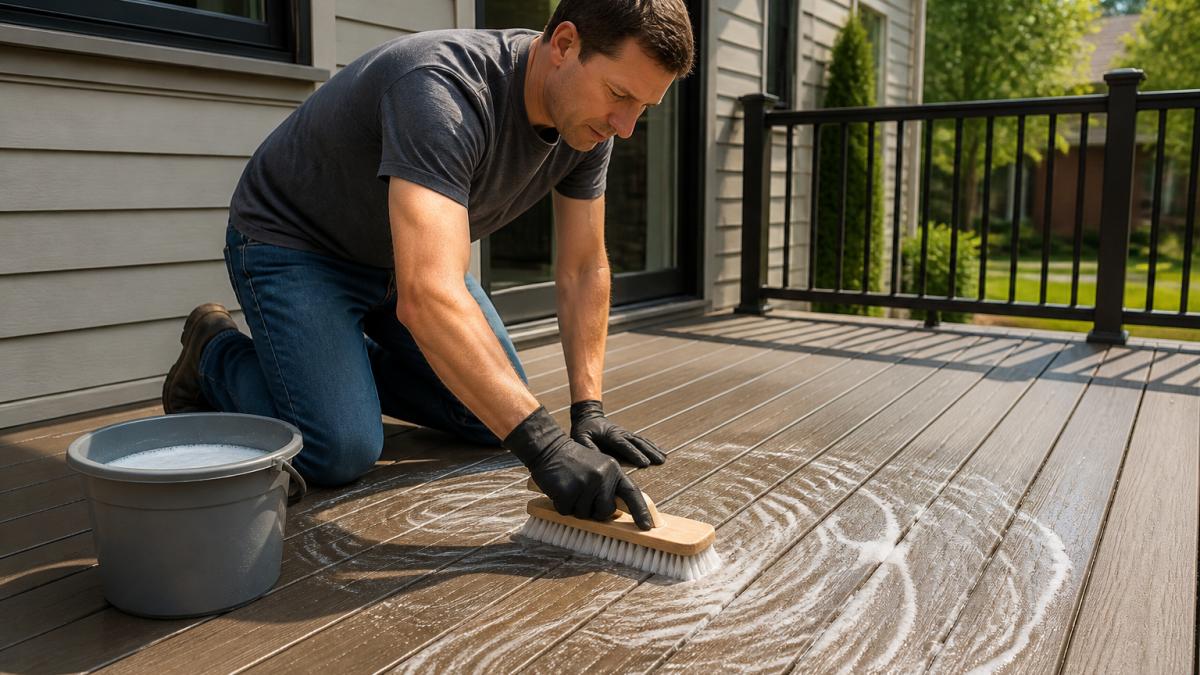
Mix warm soapy water in a bucket using a composite-deck cleaner or mild dish soap. Dip a soft-bristle brush into the solution and scrub the deck surface in circular motions. Work one section at a time, about 4-6 feet at a time.
Press firmly enough to loosen dirt and algae, but not so hard you damage the composite material. Soft-bristle brushes are essential, stiff or wire brushes scratch the surface. Pay extra attention to areas that receive less sunlight, where mold and mildew grow more easily.
For stubborn spots, let the soapy water sit for 5-10 minutes to soften the buildup. Then scrub again. Most dirt releases with moderate pressure and time.
Step 4: Final Rinse and Dry
Rinse the entire deck thoroughly with the garden hose and fan-tip nozzle. Rinse away all soap residue. Let water run clear across the surface. This prevents soap film from drying on the boards, which dulls the finish.
Allow the deck to air dry completely. Avoid walking on the deck while it’s still wet.
Composite Deck Cleaning Products That Work
The right cleaning products remove stains without damaging composite material. Most composites tolerate mild soap and water. For tougher stains, composite-specific cleaners work better than household cleaners.
Mild dish soap mixed with warm water handles routine dirt and light algae. This is your first choice for regular maintenance. Use a 1:10 ratio of soap to water. Avoid bleach-based cleaners, which can discolor composite decking and damage the protective coating.
Composite-deck cleaners are formulated to lift stains without harsh chemicals. Brands designed for composite materials won’t harm the wood fibers or plastic binders. Follow the product instructions carefully. Some require dilution; others apply full-strength. Always test on a hidden area first.
For mold and mildew, a mixture of white vinegar and water works well. Mix one part white vinegar to three parts water. Spray or brush onto affected areas and let sit for 10-15 minutes. Scrub gently with a soft brush, then rinse thoroughly.
Avoid pressure washers above 1,500 PSI on composite decking. High pressure damages the surface and can force water into gaps, promoting rot in the wood fibers beneath.
How to Remove Stains from Composite Decking
Different stains require different approaches. Treating stains quickly prevents them from setting permanently into the composite material.
Food and Grease Spills
Food spills and grease stains appear on decks used for entertaining. Remove them promptly, the longer they sit, the harder they become to clean.
Wipe up spills immediately with a cloth or paper towel. For dried spills, spray with warm soapy water and let sit for 5 minutes. Scrub gently with a soft brush. For stubborn grease, use a composite-deck cleaner designed to break down oils.
Avoid using harsh degreasers or solvents, which can damage the composite surface. Stick to mild soap solutions and specialized deck cleaners.
Mold, Mildew, and Algae
Mold and mildew thrive in shaded areas where moisture lingers. Algae appears as green or black streaks, typically on north-facing sections or under trees.
For light mold and mildew, spray with a vinegar and water solution (1:3 ratio). Let sit for 15 minutes, then scrub with a soft brush. Rinse thoroughly. For heavier growth, use a composite-deck cleaner specifically formulated for mold and mildew removal.
Prevent mold by improving air circulation. Trim tree branches that block sunlight and airflow. Clear leaves and debris regularly so moisture doesn’t accumulate. Ensure gutters drain properly and don’t dump water onto the deck surface.
Never use bleach on composite decking. Bleach can bleach the color of composite boards and degrade the protective coating. Vinegar, mild soap, or composite-specific cleaners are safer alternatives.
Rust and Metal Marks
Rust stains come from metal fasteners, outdoor furniture legs, or nearby metal objects. They appear as orange or brown discoloration on the deck surface.
For light rust marks, spray with a composite-deck cleaner and scrub with a soft brush. For stubborn rust, apply a rust-removal product designed for outdoor surfaces. Follow product instructions and test on a hidden area first.
Prevent rust stains by replacing corroded fasteners with stainless steel hardware. Move metal furniture regularly so legs don’t sit in one spot. Use furniture pads under metal chair and table legs to prevent rust transfer.
Pressure Washing Composite Decking: When and How
Pressure washing can clean composite decking quickly, but improper technique causes damage. Use caution and follow these guidelines.
Only use a pressure washer with a maximum PSI of 1,500. Set the nozzle to a wide fan spray, never a concentrated jet. Maintain a distance of at least 24 inches from the deck surface. Never aim the nozzle directly at board gaps or fasteners, which can force water into the deck structure.
Pressure wash only when necessary, for heavy algae or deep dirt buildup. For routine cleaning, stick to hand-scrubbing with a soft brush and mild soap.
Test the pressure washer on a hidden corner first. If the force damages the surface or discolors the boards, reduce pressure further or switch to hand cleaning.
Pressure washers are a tool for deep cleaning, not routine maintenance. For most homeowners, regular hand-scrubbing with a soft brush and composite-deck cleaner keeps the deck clean without risk of damage.
Seasonal Maintenance and Weather Protection
Composite decking faces different challenges in each season. Adjusting your maintenance routine prevents weather-related damage.
Spring brings pollen, dust, and increased moisture. Sweep and rinse the deck thoroughly. Check for mold or mildew that developed during winter. Clear any debris that accumulated under snow.
Summer means UV exposure and heat. Composite boards fade slightly over time, but regular cleaning slows the process. Shade your deck with umbrellas or a pergola when possible. Clean spills promptly, summer entertaining leads to food and drink stains.
Fall requires frequent sweeping to remove leaves and debris. Leaves trap moisture and promote mold growth. Clear gutters so water drains properly and doesn’t pool on the deck surface.
Winter brings snow, ice, and freeze-thaw cycles. Remove snow and ice promptly to prevent moisture buildup. Use plastic shovels or snow blowers on low settings, metal tools scratch composite boards. Avoid rock salt or calcium chloride, which can stain and damage the surface. Use sand or kitty litter for traction instead.
In regions with harsh winters, inspect board gaps and fasteners in spring. Freeze-thaw cycles can shift boards slightly or loosen fasteners. Tighten fasteners if needed.
Common Mistakes to Avoid
Most composite decking problems result from preventable mistakes. Knowing what not to do protects your investment.
Mistake 1: Using harsh chemicals. Bleach, acetone, and strong solvents damage composite material. Stick to mild soap, vinegar, or composite-specific cleaners.
Mistake 2: Ignoring spills. Food, grease, and organic matter harden into permanent stains if left sitting. Wipe spills immediately and scrub dried spots within a few hours.
Mistake 3: Skipping debris removal. Leaves and dirt trap moisture, promoting mold and accelerating wear. Sweep at least monthly, more often in fall.
Mistake 4: Using high-pressure washers. Pressure above 1,500 PSI damages the composite surface and forces water into gaps. Hand-scrubbing is safer and just as effective.
Mistake 5: Neglecting board gaps. Debris lodged between deck boards creates moisture pockets. Clear gaps regularly with a small stick or flat tool.
Mistake 6: Using metal tools. Wire brushes and metal scrapers scratch composite boards. Use soft-bristle brushes and plastic tools only.
Recommended Cleaning Schedule
A simple maintenance schedule keeps composite decking looking new and prevents damage.
| Task | Frequency | Duration | Best Time |
|---|---|---|---|
| Sweep and remove debris | Monthly | 15-20 minutes | Year-round |
| Rinse with garden hose | Monthly | 10-15 minutes | After sweeping |
| Wash with soap and soft brush | Twice per year | 1-2 hours | Spring and fall |
| Check for mold and mildew | Monthly | 5 minutes | Shaded areas |
| Clear board gaps | Monthly | 10 minutes | Year-round |
| Deep clean or pressure wash | Once per year | 2-3 hours | Spring or fall |
| Inspect fasteners and boards | Twice per year | 15 minutes | Spring and fall |
This schedule prevents stains from setting and catches damage early. Adjust frequency based on your climate and how much the deck gets used.
Composite decking requires consistent care, but the routine is straightforward. Regular sweeping, gentle washing, and prompt spill cleanup keep your deck looking great for years. At EFER Renovations Inc., we help homeowners maintain their decks and handle repairs when damage occurs. If your composite deck needs professional cleaning or if you’re considering a new deck installation, contact us today for a quick, no-obligation estimate. Our team brings 13 years of experience and a commitment to quality workmanship that protects your investment and boosts your property value.
Frequently Asked Questions
How often should composite decking be cleaned?
Clean your composite decking at least twice a year, ideally in spring and fall. In areas with heavy leaf cover, moisture, or pollen, aim for quarterly cleaning. Spot-clean food spills and debris immediately to prevent staining. Regular cleaning prevents mold and mildew buildup and extends the life of your deck boards.
Is it okay to pressure wash composite decking?
Low-pressure washing is acceptable, but high-pressure washers can damage composite deck boards. Use a pressure washer only at 1,500 PSI or lower with a fan-tip nozzle, keeping the wand 12 inches away from the surface. For routine maintenance, hand-scrubbing with a soft-bristle brush and composite-deck cleaner is safer and more effective than pressure washing.
What should you not use on composite decking?
Avoid high-pressure washers (over 1,500 PSI), harsh chemicals, bleach, abrasive scrubbing tools, and wire brushes. Do not use oil-based cleaners or deck stains designed for wood. Always check your deck’s care instructions from the manufacturer, as maintenance requirements vary by product generation.
How do you prevent mold and mildew on composite decking?
Ensure proper drainage by clearing gaps between deck boards of debris. Keep moisture from pooling on the surface by sweeping standing water. Clean your deck twice yearly and remove spills promptly. Trim nearby vegetation to reduce shade and improve air circulation. In humid climates, consider a composite-deck cleaner formulated to inhibit mold and mildew growth.