
Table of Contents
- Start with a Room-by-Room Window Replacement Installation Day Checklist
- How to Protect Furniture During Window Replacement
- Clear Interior and Exterior Access for the Window Installer
- Do Window Installers Need to Come Inside? What to Expect on Installation Day
- How Long Does Window Replacement Take? Timeline and Schedule Planning
- Plan for Pets, Children, and Household Accessibility Needs
- What Homeowners Should Not Do Before Window Replacement
- Post-Installation Walkthrough, Cleanup, and Handoff
- Frequently Asked Questions
Last Updated: October 17, 2026
Start with a Room-by-Room Window Replacement Installation Day Checklist
Learning how to prepare home for window replacement starts with one simple idea: clear the path before the crew arrives. A focused walkthrough of each room takes about an hour and prevents most installation-day delays.
At EFER Renovations Inc., we have handled exterior projects for more than 13 years. The homes that go smoothly share one habit. Owners prepare room by room, not all at once.
Here is the short version of what matters most:
- Clear a path to every window being replaced
- Remove window treatments and wall décor near the glass
- Protect floors and furniture
- Move pets and children to a safe zone
- Confirm arrival time and the installation plan
Below, we break each step down so nothing gets missed. The checklist covers the whole house, from the busiest living room to the smallest hallway window.
The single biggest cause of installation-day delays is blocked access. A clear path to each window opening saves time and protects your belongings.
Living Areas and Bedrooms
Living rooms and bedrooms usually hold the most furniture, so start there. Move sofas, beds, and large chairs at least three feet back from each window. The installation crew needs room to set tools, remove old sashes, and lift new window frames into place.
Strip each window bare. Take down curtains, blinds, and valances. Remove hardware too. Roll up area rugs near the work area or move them out entirely.
Then handle the walls. Take down picture frames, mirrors, and shelves close to the glass. Vibration from removing existing windows can knock loose items down.
Kitchen, Bathrooms, and Hallways
Small rooms still need attention. In kitchens, clear the counters under and beside each window. Move small appliances, dishes, and plants to another room.
Bathrooms need the same treatment. Remove shower curtains, towels, and bath mats near the window. Store toiletries in a cabinet.
Hallways are easy to overlook. Clear shoes, coat racks, and console tables so the crew can walk through with materials. A clear pathway from the entry door to every work area keeps the job moving.
How to Protect Furniture During Window Replacement
Protecting furniture during window replacement comes down to three moves: cover it, move it, or remove it. Dust and small debris travel further than most people expect, so cover anything you cannot relocate.
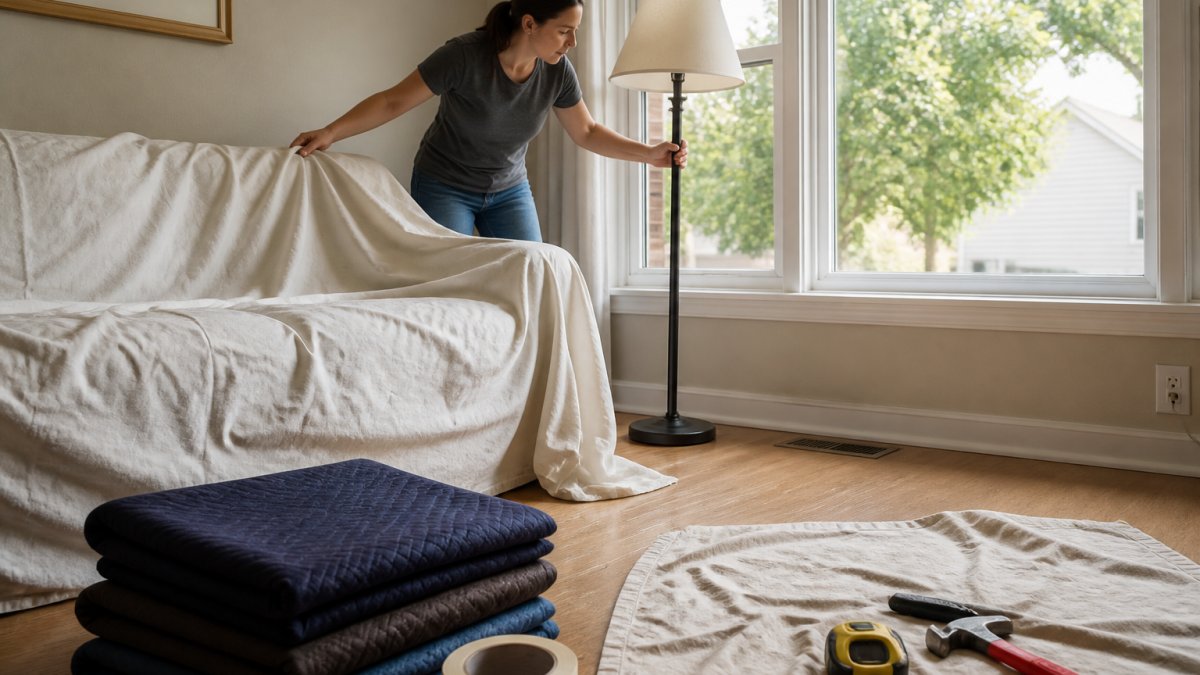
Use these steps to shield the room:
- Move small items like lamps, vases, and décor to another room.
- Push large furniture toward the center of the room, away from windows.
- Cover remaining pieces with drop cloths or plastic sheeting.
- Tape down edges so covers stay in place.
- Roll up rugs or cover them near the work area.
Fragile items deserve extra care. Pack glassware, electronics, and valuables into boxes and move them out of the work zone. Dust from caulking and old window removal settles on everything nearby.
Photograph each room before the crew arrives. If a question about damage comes up later, you have a clear before-and-after record.
Clear Interior and Exterior Access for the Window Installer
Installers need access on both sides of every window. Inside, they remove old frames and set new ones. Outside, they check the exterior seal, apply caulking, and confirm the window sits level and square.
Plan for both, and the job stays on schedule.
Inside the Home: Pathways, Window Treatments, and Fragile Items
Inside access is about open floor space. Clear a straight path from the front door to each window. Move furniture that blocks doorways or hallways.
Remove all window treatments, including curtains, blinds, and shades. Take down fragile décor near the glass. Store electronics and valuables away from the work area.
Keep pathways clear throughout the day. Crews carry glass, screens, and trim through the house, and a clear route protects both your floors and your belongings.
Outside the Home: Plants, Bushes, and Exterior Obstructions
Outside access matters just as much. Trim bushes and branches that block the windows. Move potted plants, garden hoses, and lawn furniture away from the work area.
Check for anything attached to the exterior wall near the windows. Remove or secure items that could interfere with ladders or scaffolding. A clear exterior workspace speeds up installation and reduces the chance of damage to your landscaping.
Do Window Installers Need to Come Inside? What to Expect on Installation Day
Yes, window installers almost always need to come inside. Interior access lets the crew remove old sashes, set new frames, and check the fit from both sides.
Expect a busy house for the day. Crews move between rooms, carry materials, and create some dust and noise. Plan for interior access from the start, and the day runs smoother.
Here is what typically happens:
- The crew arrives and confirms the plan with you
- They lay drop cloths and set up the work area
- Old windows come out, and new ones go in
- Crews seal gaps with caulking and check that each window is level and square
- They test locks, screens, and glass before cleanup
Interior access also lets you watch the work. Ask questions when the crew pauses. A good installer will walk you through what they are doing.
How Long Does Window Replacement Take? Timeline and Schedule Planning
Most single-window replacements take a few hours, and a full-house project usually runs one to three days.
A typical installation day follows a predictable sequence. The crew arrives and walks the scope with you, then stages materials and lays drop cloths.
Use this rough guide to plan your day:
| Project Size | Typical Duration | What to Plan |
|---|---|---|
| 1-2 windows | Half a day | Clear one room, secure pets, plan to be home for the arrival window |
| 3-6 windows | 1-2 days | Clear multiple rooms, plan meals out, expect noise and dust each day |
| Whole house | 2-3 days | Full prep, temporary relocation of pets, confirm daily start and stop times |
Schedule planning starts before installation day. Confirm the arrival window and expected departure time with your installer, and ask how many crew members will be on site.
Weather is the biggest variable you cannot control. Rain or high wind can pause exterior work, and in some cases the crew will reschedule rather than leave an opening exposed.
Permits and inspections can also affect timing. Some jurisdictions require a permit for window replacement, and an inspection may need to happen before the job is considered complete.
Do not schedule deliveries, repairs, or visitors on installation day. Crews need open access, and extra foot traffic slows the job and raises the risk of damage.
Finally, plan your own day around the work. If you work from home, pick a room far from the active windows or plan to work elsewhere during the noisiest hours. If you have appointments, tell the installer who will be home and how to reach you. A realistic schedule on your side is as important as the crew’s.
Plan for Pets, Children, and Household Accessibility Needs
Pets and children need a safe zone away from the work area. Installation day brings noise, open windows, and crew members moving in and out.
Start with a dedicated safe room. Choose a space with a door that closes, away from the windows being replaced, and set it up before the crew arrives.
Children need the same kind of boundary. Explain ahead of time that the work area is off-limits and set up a distraction in another part of the house.
Accessibility matters too. If someone in the home uses a wheelchair or walker, keep pathways wide and free of tools, cords, and debris.
Security is part of the plan. Windows stay open during installation, so lock up valuables and keep exterior doors closed when not in use.
Write the safe-room plan and the alarm bypass on a single sheet of paper and hand it to the crew lead at arrival. A one-page brief prevents repeated questions and keeps everyone on the same page.
Finally, plan for the end of the day. Before the crew leaves, confirm that all windows are closed and locked, the alarm is restored, and pets and children can safely return to the prepared rooms. A short check at handoff prevents surprises after the crew has gone.
What Homeowners Should Not Do Before Window Replacement
Some prep habits cause more harm than good. Avoid these common mistakes:
- Do not remove old windows yourself
- Do not caulk or seal anything before the crew arrives
- Do not move heavy furniture alone if it risks injury
- Do not leave pets or children unsupervised near the work area
- Do not schedule other contractors on the same day
Also skip the urge to “help” during installation. Crews follow a set order for removal and sealing. Interrupting that flow can cause gaps, misaligned frames, or damage to new glass.
Post-Installation Walkthrough, Cleanup, and Handoff
The final step is a walkthrough with the crew. Check every window before they leave. Look for smooth operation, clean glass, secure locks, and proper screens.
Inspect the interior and exterior seals. Ask about caulking and confirm there are no gaps. Test each window by opening and closing it.
Then handle cleanup. Crews usually remove debris and old materials. Confirm the work area is clear, and check floors and furniture for dust.
At EFER Renovations Inc., every project ends with a walkthrough and a clear handoff. Our team backs workmanship with a 10-year warranty, and we are GAF, Owens Corning, and IKO certified contractors.
A good handoff leaves you confident in the work. Ask questions, keep your paperwork, and note any follow-up items before the crew leaves.
Frequently Asked Questions
Do window installers need to come inside my home?
Yes, in most cases. Window installers need interior access to remove old sashes, set the new window frames, apply caulking and sealant, and check that each window is level and square. They also inspect locks, screens, and trim from inside. Clear a path to every window opening and remove curtains, blinds, and fragile décor beforehand. If anyone in the household has mobility concerns or a security system with alarm sensors on windows, tell the installation crew before arrival so they can plan their work area.
How should I protect furniture and floors during window replacement?
Move furniture at least 3 to 4 feet away from each window opening, or push it to the center of the room and cover it with drop cloths or plastic sheeting. Roll up rugs or tape down edges near the work area. Installers typically lay their own floor protection, but adding a layer of heavy canvas or moving blankets under the window helps with dust and dropped tools. Remove electronics, valuables, and fragile items from the room entirely. This protects belongings and gives the crew a clear, safe work area.
How long does window replacement take for a typical home?
Most standard window replacements take one to three days for a whole-house project, depending on the number of windows, window style, and whether exterior trim or siding work is involved. A single window can take 1 to 2 hours. Installation crews usually arrive in the morning and provide an arrival and departure time during the scheduling call. Ask your window installer for a written schedule and confirm the installation plan a day ahead so you can plan for pets, children, and access to the work area.
What should I do after the installers finish?
Walk through each room with the crew lead to inspect every window for smooth operation, proper locks, clean glass, and sealed gaps. Test the screens and check that caulking lines are neat. Ask about cleanup procedures and confirm that all debris is removed from the work area. Keep the manufacturer’s warranty paperwork and any care instructions. Wait at least 24 hours before washing new windows or rehanging curtains and blinds, and rearm any security system sensors that were disabled during installation.
Preparing for window replacement takes one focused afternoon, but it protects your home and keeps the project on schedule. If you want a crew that shows up on time and walks you through every step, EFER Renovations Inc. is ready to help. Our team offers quick, no-obligation estimates, insurance claims assistance, and 24/7 emergency support. Get started with EFER Renovations Inc. and enjoy a smoother installation from prep day to final walkthrough.