
Table of Contents
- Start With Your Roof’s Structure and Slope
- Types of Roofing Materials Available Today
- Roofing Materials Comparison: Cost, Durability, and Maintenance
- How Long Do Roofing Materials Last?
- Matching Roofing Material to Your Climate and Local Codes
- Roofing Material for Low-Slope Roof Sections
- How to Evaluate Contractor Estimates and Permits
- Making Your Final Decision on Roofing Material
- Frequently Asked Questions
Last Updated: October 8, 2026
Start With Your Roof’s Structure and Slope
The right roofing material is the one your roof structure can carry. Before comparing shingles or metal panels, check your roof pitch and framing, they decide half your options before cost enters the conversation.
Homeowners often fall in love with a material first, then learn their roof cannot support it.
Flip the order: structure first, style second.
How Roof Pitch Limits Your Options
Roof pitch is the vertical rise over a horizontal run, written as a ratio such as 4:12. It decides which materials shed water properly.
- Steep slopes (above 4:12): Most materials work, including asphalt shingles, metal, tile, and slate
- Low slopes (2:12 to 4:12): You need materials rated for low-slope use, plus a heavier underlayment
- Flat roofs (under 2:12): Standard shingles are out. You need membrane systems or specialty products
Put the wrong material on a low slope and water backs up under the edges, causing rot, mold, and a repair bill far bigger than the roof itself.
Can Your Framing Handle the Weight?
Every material adds a different load. Asphalt shingles are light; clay tile and slate are heavy. A roof built for shingles may need reinforcement before it can hold tile.
A licensed contractor can check your framing and tell you what your roof can carry. Skipping this step leads to unplanned structural work.
Types of Roofing Materials Available Today
Most homes use one of six roofing material types, each trading cost against lifespan, weight, and upkeep.
- Asphalt shingles: The most common choice. Affordable, easy to install, widely available
- Metal roofing: Standing seam and metal panels. Long-lasting and reflective
- Clay tile: Heavy, fire-resistant, and common on Mediterranean-style homes
Your home’s style matters too. Cedar shake on a modern ranch or slate on a starter house looks out of place. Curb appeal comes from matching material to architecture.
Roofing Materials Comparison: Cost, Durability, and Maintenance
Asphalt shingles cost the least up front and last the shortest time; slate costs the most and can outlive the house. Everything else sits between those poles.
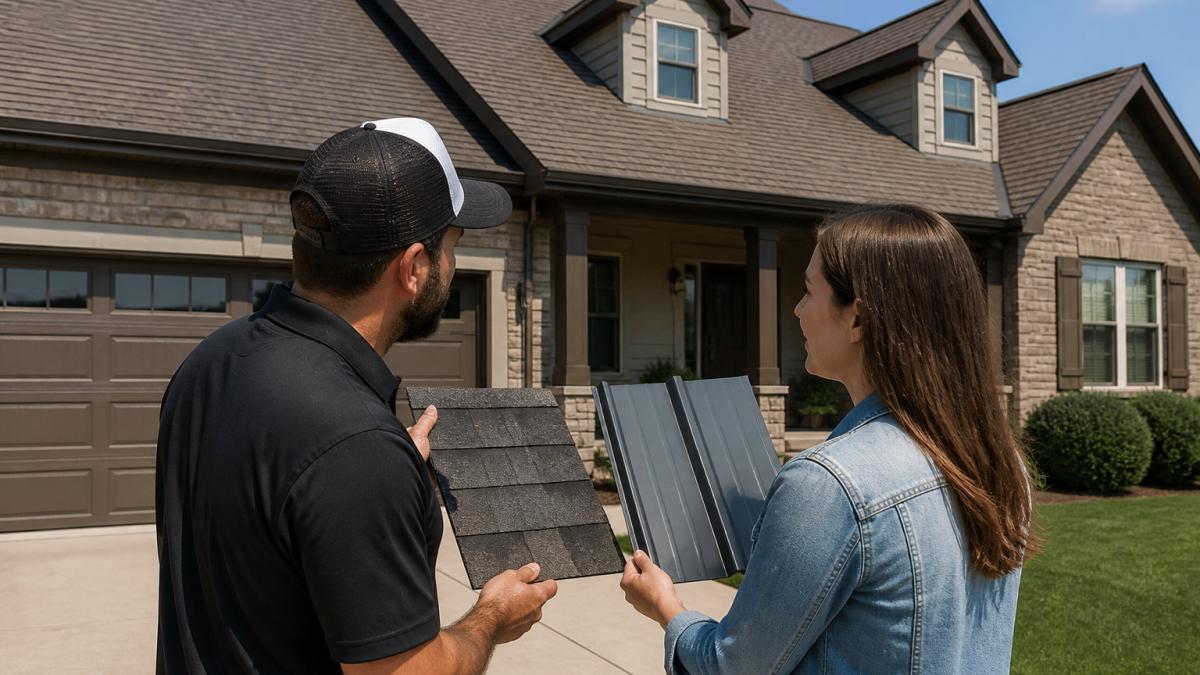
Here is how the main options stack up on the three factors homeowners ask about first:
| Material | Typical Upfront Cost | Lifespan | Maintenance |
|---|---|---|---|
| Asphalt shingles | Lowest | 15-30 years | Low |
| Metal roofing | Moderate to high | 40-70 years | Low |
| Concrete tile | Moderate to high | 40-50 years | Low |
| Clay tile | High | 50+ years | Low |
| Slate roofing | Highest | 75-100+ years | Low |
| Wood shakes | Moderate | 20-40 years | High |
Two costs hide in this table: labor (heavy materials need more crew, time, and sometimes a crane) and repairs (wood shakes need regular care; slate needs a specialist).
The Cost Nobody Puts in the Table: Total Cost of Ownership
Upfront price is what contractors quote and most homeowners compare, but it is the least useful number for a decision you will live with for decades.
Pick a horizon. Thirty years is a reasonable planning window and long enough to expose the difference between cheap-and-frequent and expensive-and-permanent.
Run the math on two common choices:
- Asphalt shingles: You pay the lowest price today, then likely replace the roof once (sometimes twice) inside a 30-year window. Add minor repairs and the occasional flashing or ventilation fix. The recurring cost is the replacement itself.
- Standing seam metal: You pay more up front, but a metal roof installed to manufacturer spec often outlives the 30-year horizon without a full replacement. Maintenance is minimal, and repairs are rare.
The pattern is consistent: a material lasting 60 years at roughly twice the upfront cost frequently beats a cheap roof you replace two or three times.
Three line items belong in any total-cost comparison:
- Installation and tear-off. Removing and disposing of the old roof is a real cost, and it recurs every time you replace. A long-lived material pays that cost once.
- Maintenance and repair. Wood shakes need periodic treatment and replacement of damaged pieces. Slate repairs require a specialist, and specialist labor is priced accordingly. Asphalt is inexpensive to patch but needs patching more often.
- Replacement frequency. This is the multiplier that flips the comparison. Multiply the full installed cost by how many times you expect to pay it inside your horizon.
How to Compare Materials Without Guessing
You do not need exact future prices to compare soundly, just a consistent method:
- Ask each contractor for the installed cost, not the material cost. Installed cost includes labor, underlayment, flashing, ventilation, tear-off, and disposal.
- Ask for the expected service life of the specific product line, not the category. A 30-year shingle and a 50-year shingle are different products at different prices.
- Ask what maintenance the warranty requires. A warranty that is voided by skipped maintenance is not protection.
When you compare bids, compare cost per year of service, not sticker price. A roof at twice the price that lasts three times as long is the better financial decision, and it is the comparison most homeowners never run.
How Long Do Roofing Materials Last?
Lifespan depends on material, install quality, and weather. Asphalt shingles typically last 15 to 30 years, metal roofing 40 to 70 years, and slate can pass a century.
Install quality changes these numbers more than homeowners expect: a premium material installed poorly fails before a basic one installed well.
Ask your contractor about underlayment and flashing, not just the surface material. These hidden layers often decide how long a roof actually lasts, and they are where cut-rate bids save money.
Matching Roofing Material to Your Climate and Local Codes
Your climate narrows the list fast. In our region, roofs face snow load, hail, high winds, and summer heat. Each one favors different materials.
- Snow and ice: Metal and asphalt shed snow well. Smooth tile can too
- Hail: Impact-rated shingles and metal hold up best
- High winds: Proper fastening matters as much as the material itself
That is the weather half. The half most homeowners discover too late is the rulebook half, building codes, fire ratings, wind ratings, and insurance requirements that can strike a material off your list regardless of climate performance.
Building Codes and Permits
Roofing is permitted work in most jurisdictions. A replacement generally requires a permit and at least one inspection, which checks the parts you will never see again: underlayment, flashing, fastening, and ventilation.
Codes vary by state, county, and sometimes by individual municipality, so the only reliable answer is your local building department. What codes commonly govern:
- Fire rating. Roof coverings are classified by their resistance to external fire exposure. In areas prone to wildfire, codes may require a higher fire classification and effectively rule out wood shakes.
- Wind rating. In high-wind zones, codes specify fastening patterns and may require products tested to a minimum wind-uplift standard. The material matters less than whether it is installed to the required fastening schedule.
- Snow load. Structural codes set the design snow load for your area. This ties directly back to framing, a heavy material may be permitted by the product but not by your structure.
Unpermitted roof work creates two problems: it can stall a home sale and give an insurer grounds to deny a claim. Ask your contractor who is pulling the permit and confirm it is in the bid.
Insurance Rules That Change the Math
Your homeowner policy is a selection factor, not an afterthought. Two patterns are common:
- Premium discounts for impact-rated roofs. Many insurers offer reduced premiums for roofs meeting a recognized impact-resistance standard, because hail damage is one of the most frequent roof claims.
- Coverage conditions and exclusions. Some policies limit coverage for certain roof types, require an inspection after a certain age, or apply actual cash value rather than replacement cost to older roofs. A material with a very long lifespan can interact with these rules in ways a short-lived one does not.
Call your insurer before you sign a contract. Ask three questions: Does this material affect my premium? Does it affect my coverage terms? Is there documentation the insurer needs at installation?
How to Check Your Local Constraints Before You Shop
Do this before you fall in love with a material:
- Call the building department. Ask what the code requires for roof covering fire classification, wind uplift, and snow load in your area.
- Ask about the permit process. Who pulls it, what inspections are required, and what the fee covers.
- Call your insurer. Ask how the candidate materials affect premium and coverage.
- Confirm the product meets the standard, not just the category. A contractor should be able to show the product’s rating documentation, not just say “it’s rated.”
A material that passes your climate test can still fail your code or insurance test. Check the rulebook before you check the showroom.
Roofing Material for Low-Slope Roof Sections
Low-slope sections cannot use standard shingles, water moves too slowly and seeps under the overlaps.
The right roofing material for a low-slope roof is a membrane system. Common options include:
- Modified bitumen: Rolls applied with heat or adhesive
- EPDM: A rubber membrane, popular for flat and low-slope roofs
- TPO: A reflective single-ply membrane that helps with energy efficiency
Many homes mix pitches: a steep front slope might take shingles while a low rear porch needs membrane. A good contractor plans for both in one estimate.
How to Evaluate Contractor Estimates and Permits
A roofing estimate is only useful if you can compare it to another. Most bids hide the details that matter.
- Does the quote list the exact material brand and product line?
- Are underlayment, flashing, and ventilation included?
- Is the old roof removal and disposal spelled out?
Permits are not optional. Most towns require one for a roof replacement, and unpermitted work can cause problems when you sell or void your insurance coverage.
Never pay a large deposit up front or accept a bid with no written scope. If a contractor asks for most of the money before work starts, walk away. That is the most common sign of a job that never gets finished.
If a storm caused the damage, your insurer may cover part of the work. EFER Renovations Inc. handles insurance claims assistance for homeowners, which means we help document the damage and work through the adjuster process.
Making Your Final Decision on Roofing Material
Choosing a roofing material balances five things: roof structure, climate, budget, maintenance tolerance, and how long you plan to stay.
Rank them honestly. Selling in three years? A mid-range asphalt roof may beat slate. Forever home?
Think about future upgrades too.
A durable roof also lifts resale value and curb appeal. That is why we recommend starting with a no-obligation estimate from a certified team.
Frequently Asked Questions
Which type of roofing material is best for my home?
There is no single best roofing material. The right choice depends on your roof pitch, your home’s structural capacity, the local climate, and your budget. Asphalt shingles remain the most common option because they balance cost and performance. Metal roofing lasts longer and reflects heat well. Tile and slate offer superior durability but require stronger framing. A qualified roofing contractor can assess your specific roof and recommend materials that fit your situation.
How long do different roofing materials last?
Lifespan varies widely by material. Asphalt shingles typically last 15 to 30 years depending on quality and climate. Metal roofing can last 40 to 70 years. Clay and concrete tile often exceed 50 years. Slate can last a century or more. Wood shakes last roughly 25 to 40 years with proper maintenance. Keep in mind that installation quality, ventilation, and local weather all affect how long any roofing material actually performs.
Which roofing material works best for a low-slope roof?
Low-slope roofs need materials that shed water effectively without relying on gravity alone. Standing seam metal, modified bitumen, and single-ply membranes like TPO or EPDM are common choices. Asphalt shingles are not suitable below a 2:12 pitch. If only part of your roof is low-slope, you may need a different roofing material for that section than for the steeper areas, so ask your contractor about transitions and flashing details.
How much should I expect to pay for a new roof?
Roofing costs depend on material type, roof size, pitch, labor rates, and whether the old roof needs removal. Asphalt shingles cost the least upfront, while metal, tile, and slate run higher. Because pricing varies by project, request written estimates from at least three licensed contractors. A reputable roofer will provide a detailed breakdown covering materials, labor, permits, and disposal so you can compare quotes accurately.
Storm damage rarely gives you time to research. You need a roofer who shows up, documents the damage, and helps you through the insurance claim without the runaround. EFER Renovations Inc. brings 13 years of experience, certified installation crews, and a 10-year workmanship warranty to every job. Get started with EFER Renovations Inc. and protect your home with a roof built to last.